
Performance Management
Software
Evidence-based performance management software that connects role expectations, goals, competency, feedback and development to support continuous performance improvement.
Performance management should do more than record annual reviews. It should help organizations answer three essential questions: What’s expected? Where are we now? What’s next?
Centranum brings together role expectations, goals, competency, performance reviews, feedback and development planning within a single configurable platform. Managers gain a clear, evidence-based view of individual and team performance, employees understand expectations and development priorities, and HR teams benefit from consistent processes, auditable records and real-time reporting.
By connecting performance management with workforce capability, organizations can strengthen accountability, support employee growth and align individual performance with business objectives.
Trusted by government, healthcare, engineering and technology organizations to deliver fair, evidence-based performance management.
Connect role expectations, goals, competency, feedback and development in one configurable performance management platform.
Why Modern Performance Management Matters
Effective performance management isn’t just about conducting reviews—it’s about creating organizational clarity and accountability. Performance can only be assessed fairly when people understand what is expected of them. Without clear role expectations, objectives and performance criteria, evaluations become subjective, inconsistent and difficult to justify.
When expectations are clear and feedback is consistent, employees are more engaged, managers can lead with confidence, and leadership gains real visibility into workforce performance, capability and development.
A structured performance management process connects expectations with evidence. It provides a consistent framework for setting goals, gathering feedback, evaluating performance and identifying development opportunities. Rather than relying on annual reviews alone, organizations gain an ongoing view of individual and team performance that supports fair decisions, continuous improvement and alignment with business objectives.
The Challenges with Traditional Performance Management
- Performance reviews seen as a box-ticking exercise, wasting time & resources
- Expectations aren’t aligned with organizational objectives.
- Feedback is infrequent and poor quality
- Opportunities for talent development are missed
Centranum helps you replace outdated performance reviews with a continuous performance management process based on role clarity, fairness and real development.
Drive employee engagement and accountability with performance management software designed to promote regular feedback and reduce administration
How Performance Management Works
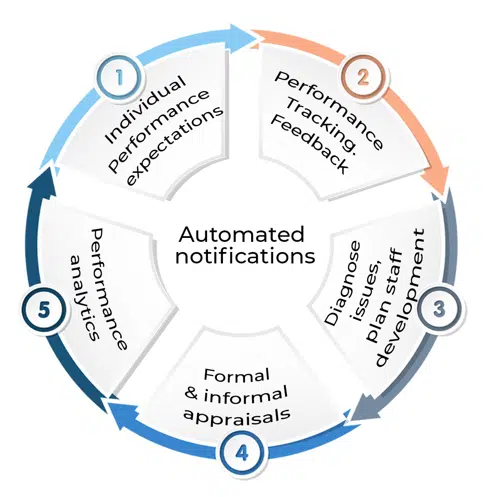
Effective performance management follows the same three questions that underpin the Centranum platform: What’s expected? Where are we now? What’s next? By connecting these questions within a single platform, organizations create a continuous performance management process rather than a series of disconnected activities.
What’s Expected?
Every performance conversation starts with clear expectations.
- Define role responsibilities and accountabilities.
- Establish competency and behavioral expectations.
- Set individual, team or organizational goals aligned with business priorities.
Where are we now?
Performance is evaluated against those expectations using multiple sources of evidence.
- Capture ongoing feedback and achievements through Journals.
- Conduct structured performance reviews using configurable workflows.
- Incorporate competency assessments, goals and evidence into a fair, consistent evaluation.
- Support moderation and calibration to improve consistency across managers.
What’s Next
Performance management should always lead to action.
- Create personalized development plans.
- Link development objectives to learning resources and career pathways.
- Support regular coaching conversations and continuous improvement.
- Measure progress over time rather than relying solely on annual reviews.
Performance Management In Action
Centranum brings together the key activities involved in performance management within a single connected platform. Rather than using separate tools for goals, reviews, feedback and development planning, managers and employees work from one source of truth throughout the performance cycle.
The platform supports:
Role Expectations – Define responsibilities, competencies and performance standards.
Goal Management – Set and align individual, team and organizational goals.
Continuous Feedback – Capture coaching conversations, achievements and observations through Journals.
Performance Reviews – Configure review workflows, rating scales and approval processes.
Development Planning – Turn review outcomes into structured development plans linked to learning resources.
360 Feedback – Gather multi-source feedback where appropriate.
Reporting & Analytics – Monitor progress, calibration and organizational performance insights.
How the Platform Supports Performance Management
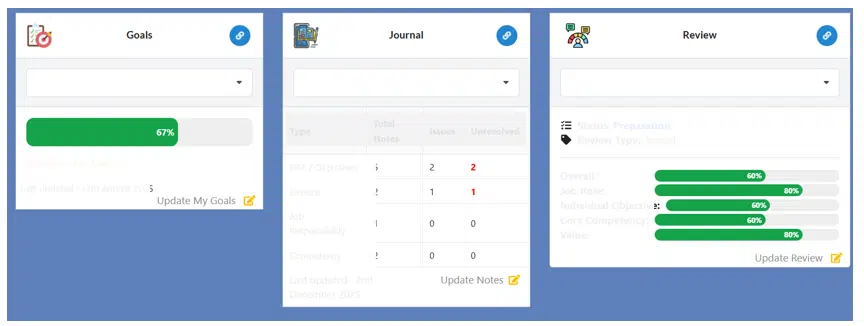
Staff Dashboard
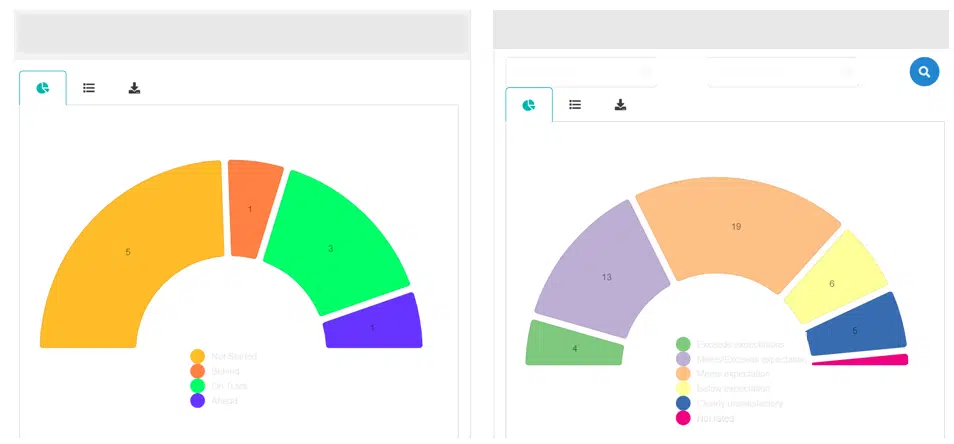
Manager Dashboard
Flexible Starting Points
Every organization starts from a different place. Centranum allows you to implement the processes that best fit your current maturity while maintaining one connected workforce information framework.
Start with what fits your context:
Your Values based behavior or core competency expectations PLUS
- Goals
Start with individual, team or organizational goals linked to your business objectives. - Role-Based Performance
Begin with clearly defined role expectations to support fair, evidence-based performance evaluation - Combine both
Many organizations combine role expectations with goals to create a more balanced and objective view of performance.
Expand Over Time
As your performance management processes mature, additional capabilities can be introduced, including:
- Development Planning
- Journals and Continuous Feedback
- Review Calibration
- 360 Feedback
- Learning Alignment
- Career Development
Why organizations choose Centranum
Connected Performance Management
Credible Performance Management
- Connects role expectations, goals, competency, feedback and development in one platform.
- Supports continuous, evidence-based performance management rather than disconnected annual reviews.
- Configurable to reflect your organization’s frameworks, workflows and governance.
- Aligns performance with workforce capability, career development and organizational objectives.
- Modular architecture lets you start with the processes you need today and expand over time.
Enterprise Ready
- Secure platform with role-based access and enterprise-grade controls.
- SOC 2 Type II independently audited security.
- Configurable workflows, review cycles and approval processes.
- Comprehensive audit trails and reporting.
- Designed for multi-entity and regulated organizations.
Proven Across Complex Organizations
With more than 20 years of experience, Centranum supports organizations where consistent performance standards, transparency and workforce development are critical. Our configurable approach has been successfully applied across government, healthcare, engineering, utilities, technology and other knowledge-intensive industries.
Who it’s helps
For staff

- Understand performance expectations through clear role responsibilities and goals.
- Record achievements and performance conversations throughout the review period.
- Receive regular feedback and fair, evidence-based performance reviews.
- Create and track personalized development plans linked to learning resources.
- Access goals, feedback, reviews and development activities in one personal dashboard.Changes:
For Managers & Team Leaders

- Set and align team goals with organizational priorities.
- Capture ongoing feedback and coaching conversations.
- Conduct structured, consistent performance reviews with less administration.
- Identify performance and development needs early.
- Create and monitor individual development plans.
- Access team performance dashboards and analytics.
For Senior Leaders & Executives

- Align individual performance with organizational objectives and values.
- Strengthen a culture of accountability, recognition and continuous improvement.
- Gain visibility into organizational performance, capability and development.
- Monitor performance trends across teams, business units and locations.
- Support evidence-based talent, succession and workforce planning decisions.
For HR, OD, L&D Teams
- Configure performance management workflows, review cycles and approval processes.
- Configure rating scales and calibration processes to support fair, consistent evaluations.
- Streamline performance reviews and reduce administrative effort.
- Monitor review completion, rating distributions and organizational trends through interactive dashboards.
- Support moderation, waivers and review administration efficiently.
- Connect performance outcomes with development, learning and succession planning.
- Use workforce insights to target development initiatives and measure their impact.
FAQs
How do clear performance expectations improve performance management?
Performance can only be evaluated fairly when expectations are clearly defined. Centranum connects role responsibilities, competency expectations, organizational values and goals so employees understand what success looks like before performance is assessed. By measuring performance against agreed expectations rather than subjective opinion, organizations can improve consistency, fairness and accountability while creating a stronger foundation for development.
What is continuous performance management?
Continuous performance management is the ongoing process of setting goals, tracking progress, capturing feedback, and reviewing performance throughout the year — rather than relying on a once-a-year appraisal.
How does performance management software support development planning?
Performance reviews and journals link directly to individual development plans. Gaps identified in reviews automatically feed into objectives, which can be tied to learning resources or training initiatives.
Can Centranum’s performance management system support compliance audits?
Yes. Every review, goal, and feedback entry is time-stamped and version-controlled, creating a transparent, auditable record of performance processes.
Is 360 feedback included in Centranum’s performance management solution?
Centranum integrates with its dedicated 360 Feedback module. This allows organizations to include multi-rater feedback in performance discussions when needed, alongside manager and self-assessments.
How does an employee performance management system help a business?
Effective performance management tools align employee activity with organizational goals. They help managers clearly define expectations, track progress, and identify strengths and gaps in real time. Techniques such as structured reviews, continuous feedback, and capability-based evaluation provide actionable insights that drive accountability, development, and results — not just compliance.
Our platform connects these tools with role definitions and capabilities, ensuring performance is measured against what really matters.
What are best practices for implementing effective performance management?
- Start with role clarity. Expectations must be grounded in real responsibilities.
- Make goals visible. Connect them to team and organizational priorities.
- Use competency-based feedback. Evaluate what people do and how they do it.
- Enable continuous feedback. Journals and informal check-ins improve accuracy and timeliness.
- Link performance to development. Turn insights into development action plans.
- Automate the routine. Let the system handle deadlines, reminders, and workflows.
Our platform supports all of the above in a modular, scalable way — whether you’re just starting or optimizing an existing process.
Can we start with just goal setting and reviews?
Yes. You can begin with goals and periodic reviews, or go deeper with job expectations and competency-based evaluation. Our platform supports both paths.
Is this system suitable for remote and hybrid teams?
Absolutely. Our platform provides a unified view for staff and managers, no matter where work happens — supporting continuous performance dialogue.
How does Centranum ensure frequent feedback on performance expectations
Frequent feedback requires more than manager intention — it needs smart systems that prompt action. Our platform enables ongoing conversations with built-in feedback journals and development plans, automated nudges, and progress indicators that make performance expectations and development objectives visible. Review cycles are proactive, not reactive.
Our system also lets you tailor frequency and format to your organization’s culture — supporting both structured reviews and informal check-ins.
What are the pros and cons of using 360-degree feedback in performance reviews?
Pros
- Offers a well-rounded view of employee performance, beyond the manager’s perspective
- Helps surface blind spots in behavior and interpersonal skills
- Encourages a culture of accountability and continuous improvement
Cons:
- Can backfire without clear process guardrails or psychological safety
- Feedback may be biased or vague without well structured prompts
- Time-consuming if not automated
Our 360 Feedback module is designed to mitigate these issues — with configurable relationships, process settings that reduce risk of harm, and AI-driven analysis for actionable themes and sentiment.
How do you ensure fairness in evaluations?
By anchoring reviews to defined roles, responsibilities, and competencies — and using multiple data points including feedback, development actions, and outcomes. Ensuring that rating scales are not just short labels but have expanded descriptions and using calibration to ensure consistency of ratings for each individual rater as well as between raters.
How can automation help the performance management process
Automation removes manual administration steps so managers can focus on guidance & coaching, and HR on talent development, not chasing performance management tasks.
Our platform automates:
- Setting up reviews when people start, change roles and at each new period
- Displaying the correct expectations to the right manager
- Guiding users with role-specific prompts and workflow
- Notifying contributors of next actions at the right time
This ensures compliance without micromanagement — and saves significant admin time.
How do performance management software integrations enhance overall HR functionality?
Integrations allow performance data to flow seamlessly across systems — improving decision-making and reducing duplication.
For example:
- Pull user and role data from HRIS for real-time org context
- Link learning records from LMS for development tracking
- Sync review data with compensation tools or BI dashboards
Our platform is designed for integration, with structured APIs and alignment across role, performance, development, and talent planning.
What are the pros and cons of using Generative AI in performance management?
Pros:
- Can generate summaries of feedback or reviews, saving time
- Assists in surfacing themes across large datasets (e.g. 360 reports)
- Supports coaching with prompts based on capability gaps and identification of suitable learning resources
Cons:
- Risk of inaccuracies or misinterpretations
- Needs human validation, especially for sensitive topics
- Requires governance to prevent misuse
We use AI as a co-pilot — not a replacement. AI assists in summarizing feedback and identifying sentiment themes, but we always leave the judgment to managers and employees.