
Workforce Capability
Definition
Organisations depend on workforce capability to achieve operational, strategic and service delivery objectives.
Understanding workforce capability helps organisations answer questions such as:
- Do people have the knowledge and skills required for their roles?
- Have required competencies been demonstrated?
- Are qualifications and certifications current?
- Are workforce capability requirements being met?
- Where are capability gaps creating risk?
- What workforce development priorities should be addressed?
- Is the workforce ready to perform required work?
Workforce capability provides a foundation for workforce planning, workforce development, workforce readiness and workforce assurance.
Part of the Workforce Capability Knowledge Index: Explore related workforce capability, competency and readiness concepts.
Why Workforce Capability Matters
Organisations depend on workforce capability to achieve operational, strategic and service delivery objectives.
Understanding workforce capability helps organisations answer questions such as:
- Do people have the knowledge and skills required for their roles?
- Have required competencies been demonstrated?
- Are qualifications and certifications current?
- Are workforce capability requirements being met?
- Where are capability gaps creating risk?
- What workforce development priorities should be addressed?
- Is the workforce ready to perform required work?
Workforce capability provides a foundation for workforce planning, workforce development, workforce readiness and workforce assurance.
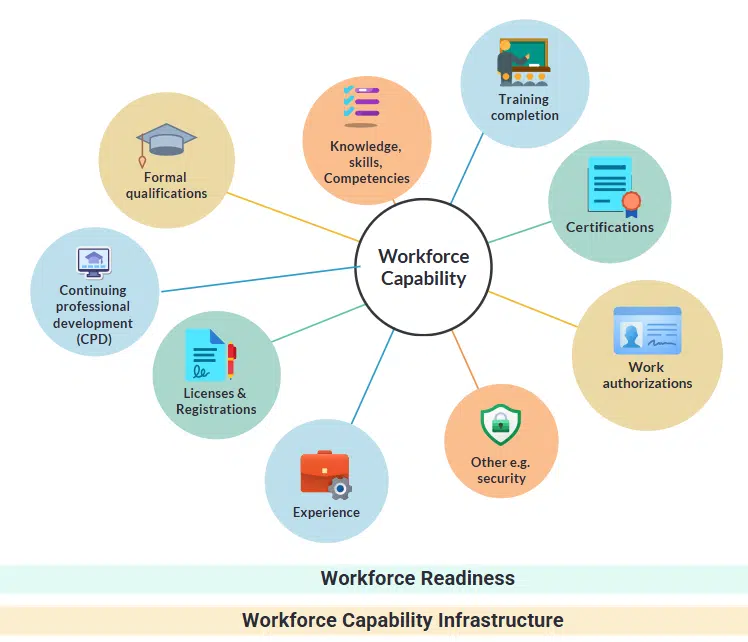
Components of Workforce Capability
Workforce capability may include a combination of:
Knowledge
The information, understanding and expertise required to perform effectively within a role or work context.
Skills
Specific abilities used to perform tasks, activities or operational responsibilities.
Competencies
The demonstrated ability to apply knowledge and skills effectively within a defined work context.
Qualifications
Academic, professional and trade qualifications that contribute to workforce capability.
Certifications
Industry, professional and compliance certifications that support workforce capability requirements.
Licenses and Registrations
Formal permissions, registrations and approvals required to undertake specific activities or professional responsibilities.
Experience
Practical workplace experience, operational exposure and role-related experience that contribute to effective performance.
Continuing Professional Development (CPD)
Professional learning and development activities that help maintain and enhance workforce capability over time.
Authorizations
Approved permissions, scopes of practice or operational authorities that enable individuals to undertake specific responsibilities.
Workforce Capability vs Skills
Skills are an important component of workforce capability.
However, workforce capability is broader than skills alone and may also include knowledge, competencies, qualifications, experience, authorisations and other capability-related requirements.
Workforce Capability vs Competency
Competency focuses on the effective application of knowledge and skills within a defined work context.
Workforce capability is broader and incorporates competencies together with other capability-related information such as qualifications, certifications, experience and authorisations.
Competency contributes to workforce capability. It does not represent the whole of workforce capability.
Relationship to Capability Requirements
Capability requirements define the workforce capability expected for a role, responsibility or activity.
These requirements may include qualifications, certifications, competencies, experience, training, CPD, authorisations and other workforce capability expectations.
Relationship to Competency Assessment
Competency assessments help determine whether knowledge and skills can be applied effectively within a work context.
Assessment outcomes contribute to an organisation’s understanding of workforce capability.
Relationship to Capability Passports
Capability Passports provide a consolidated record of workforce capability information associated with an individual.
Passports help organisations maintain visibility of workforce capability and capability requirements status.
Relationship to Workforce Readiness
Workforce capability contributes to workforce readiness.
Workforce readiness reflects the extent to which workforce capability requirements have been met and whether individuals or teams are prepared to perform required work.
Relationship to Workforce Capability Infrastructure
Workforce capability infrastructure provides the frameworks, processes, information structures and systems used to define, assess, manage and improve workforce capability.
Workforce capability is the outcome being managed. Workforce capability infrastructure provides the foundation that supports it.
Why Workforce Capability Is Becoming More Important
Many organisations are moving beyond isolated training records, credential tracking systems and skills inventories toward broader workforce capability approaches.
This shift reflects the growing need for:
- workforce visibility,
- workforce readiness,
- capability assurance,
- operational resilience,
- regulatory compliance,
- workforce development,
- and organisational agility.
As workforce requirements become more complex, organisations increasingly require a broader understanding of workforce capability and its relationship to organisational performance.
Related Concepts
FAQs
What is workforce capability?
Workforce capability refers to the collective knowledge, skills, competencies, qualifications, experience, authorisations and other attributes that enable individuals, teams and organisations to perform effectively.
Why is workforce capability important?
Workforce capability helps organisations understand whether people have the knowledge, skills, competencies and other requirements needed to achieve organisational objectives and perform required work.
Is workforce capability the same as competency?
No. Competency focuses on the effective application of knowledge and skills in a work context. Workforce capability is broader and includes competencies together with qualifications, certifications, experience, authorisations and other capability-related information.
What is the difference between workforce capability and skills?
Skills are specific abilities used to perform tasks or activities. Workforce capability is broader and includes skills together with knowledge, competencies, qualifications, experience, authorisations and other factors that contribute to effective performance and workforce readiness.
How is workforce capability related to workforce readiness?
Workforce capability contributes to workforce readiness. Workforce readiness reflects whether workforce capability requirements have been met and whether people are prepared to perform required work.
How does workforce capability support workforce readiness?
Workforce capability provides the knowledge, skills, competencies, qualifications, experience and other attributes that contribute to readiness decisions and workforce performance.