
Workforce Readiness (Concept)
Definition
The Workforce readiness (concept) refers to the extent to which individuals, teams or workforce groups meet the capability, competency, compliance and operational requirements needed to perform assigned responsibilities safely and effectively.
Workforce readiness provides visibility of whether the workforce is prepared to perform required work today, rather than simply whether learning activities, assessments or administrative processes have been completed.
Readiness may be evaluated at an individual, team, department, site or organisation-wide level depending on operational requirements.
Part of the Workforce Capability Knowledge Index: Explore related workforce capability, competency and readiness concepts.
Why Workforce Readiness Matters
Many organisations maintain information about training, competencies, credentials, certifications and development activities. However, these records are often stored in separate systems or processes, making it difficult to understand overall workforce capability.
Workforce readiness brings these elements together to answer practical operational questions such as:
- Is the workforce ready to perform required work?
- Do employees meet the requirements of their roles?
- Are there capability gaps that create operational risk?
- Are required certifications, licences or authorisations current?
- Where are reassessments or development activities required?
- Do teams have sufficient capability coverage to meet operational demands?
Readiness visibility helps organisations move beyond activity tracking and towards capability assurance.
Key Components of Workforce Readiness
Capability Requiirements
Readiness begins with understanding the requirements associated with a role, responsibility or activity. These requirements may include qualifications, certifications, experience, licences, competencies, mandatory learning and other organisational expectations.
Competency Status
Competency assessments help determine whether individuals can demonstrate the knowledge, skills and behaviours required to perform effectively within a defined work context.
Credentials and Certifications
Current credentials, licences, registrations and certifications often contribute to workforce readiness, particularly in regulated, technical and clinical environments.
Competency Evidence
Evidence provides the supporting information used to validate capability and competency decisions. Evidence may include observations, demonstrations, assessment outcomes, documents and operational sign-offs.
Authorisations
Certain activities may require formal authorisation before an individual is permitted to perform them independently.
Development Progress
Readiness may also be influenced by onboarding activities, transition-to-role programmes, development plans and capability improvement initiatives.
Levels of Workforce Readiness
Individual Readiness
Individual readiness focuses on whether a person currently meets the requirements associated with their role, responsibilities or assigned activities.
Team Readiness
Team readiness considers workforce capability across a team, department or operational unit and helps identify capability strengths, gaps and workforce risks.
Organizational Readiness
Organisational readiness provides broader visibility of workforce capability, compliance status and workforce assurance across business units, locations or workforce groups.
Relationship to Workforce Capability Infrastructure
Workforce readiness is often the visible outcome of workforce capability infrastructure.
Capability infrastructure provides the frameworks, processes, information structures and workforce management systems that support readiness visibility.
Without workforce capability infrastructure, readiness information is often fragmented across multiple systems, spreadsheets and manual reporting processes.
Relationship to Workforce Visibility & Readiness Hubs
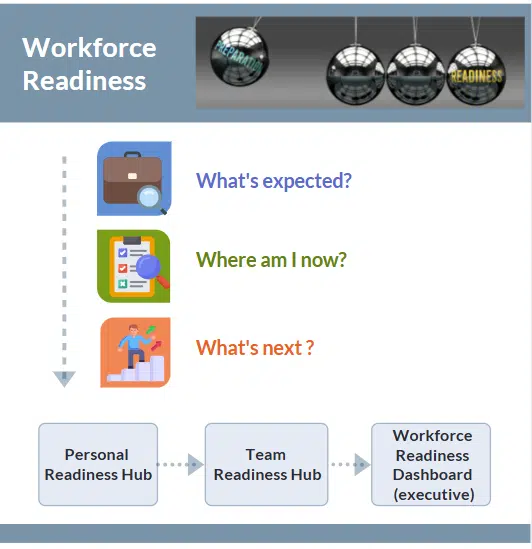
Workforce readiness information is commonly presented through readiness hubs that provide consolidated visibility across individuals, teams and organisations.
These hubs help managers, workforce leaders and employees understand:
- current readiness status,
- outstanding requirements,
- capability gaps,
- reassessment needs,
- development priorities,
- and workforce risks.
What Workforce Readiness Is Not
Training Completion
Training completion records provide evidence that learning activities have occurred. They do not necessarily demonstrate capability, competency or readiness.
Competency Assessment Alone
Competency assessments contribute to readiness but are only one component of the broader readiness picture.
Credential Tracking
Credential tracking focuses on qualifications, licences and certifications. Workforce readiness incorporates these elements alongside competency, evidence, authorisations and other requirements.
Workforce Planning
Workforce planning focuses on future workforce supply and demand. Workforce readiness focuses on the current capability and readiness of the workforce to perform required work.
Related Concepts
FAQs
What is workforce readiness?
Workforce readiness refers to the extent to which individuals, teams or workforce groups meet the capability, competency, compliance and operational requirements needed to perform assigned responsibilities safely and effectively.
Why is workforce readiness important?
Workforce readiness provides visibility of whether people are prepared to perform required work and helps organisations identify capability gaps, workforce risks and development priorities.
How is workforce readiness measured?
Workforce readiness may be measured using capability requirements, competency assessments, credential status, authorisations, evidence, reassessment schedules and development progress.
How does workforce readiness differ from workforce capability infrastructure?
Workforce readiness is a current state or outcome. Workforce capability infrastructure is the foundation of frameworks, processes and information that enables readiness to be assessed, monitored and managed.
Is workforce readiness only relevant in regulated industries?
No. While workforce readiness is commonly associated with clinical, operational and regulated environments, the concept can be applied to any organisation that needs visibility of workforce capability and readiness.