
AI and Work: Resources on Employment, Skills and Job Redesign
Artificial intelligence is rapidly changing how work is organised.
Rather than simply replacing jobs, AI is altering the tasks performed within roles, the skills organisations require, and the ways decisions are made about people and performance.
In many occupations, AI systems are automating routine information processing while augmenting more complex work that relies on experience and judgement. As a result, the impact of AI on employment is often less about immediate job loss and more about changes in job design, career pathways, and capability requirements.
Organisations are therefore facing a new challenge: understanding how AI affects not just technology systems, but work itself.
The resources below explore how AI is reshaping employment, job structures, workforce capability, and talent management systems.
What These Resources Cover
Organisations exploring the impact of AI on work are often asking questions such as:
- How will AI affect employment and jobs?
- Which occupations are most exposed to AI automation?
- How will AI change the tasks performed within roles?
- What skills and competencies will workers need to use AI effectively?
- How should organisations redesign jobs as AI becomes embedded in workflows?
- What risks arise when AI is used in hiring or workforce decisions?
The resources below explore these issues and provide research and practical guidance on employment, job redesign, workforce capability and AI governance.
AI Skills and Workforce Capability
AI adoption is changing the capabilities organisations require. Workers increasingly need the ability to use AI tools effectively, evaluate automated outputs critically, and apply professional expertise alongside automated systems.
At the same time, human capabilities such as judgement, contextual understanding and problem recognition remain difficult for AI systems to replicate.
Understanding the relationship between skills, competencies and capability frameworks is therefore becoming increasingly important.
What is expertise and will AI replace it?
What makes someone an expert? How does expertise develop? What can AI replicate—and what is missing from the knowledge available to it?
And as organizations redesign work around AI, are they augmenting their expertise – or inadvertently allowing it to disappear?
Beyond AI Literacy: Can Your Workforce Supervise AI?
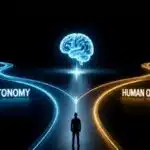
AI can increasingly do the work. But who is competent to check it? As AI takes on more complex tasks and decisions, organizations need to think beyond AI literacy to the domain expertise, judgment and oversight capabilities required to supervise AI effectively.
When AI Observes Performance: What Counts as Evidence?

AI can observe and analyze more employee behavior than any manager ever could. That does not mean every AI – observed behavior is relevant to performance – or should become evidence in a formal performance decision.
AI and Employment
AI has sparked intense debate about the future of work. Some commentators predict widespread job losses, while others argue that AI will primarily change how jobs are performed rather than eliminate them entirely.
Research so far suggests a more complex picture: AI may reshape the task composition of jobs, alter career pathways, and increase the value of experience and judgement.
AI and Employment: What the Research Shows
Despite alarmist headlines there is not yet evidence of mass job destruction by AI. It is reshaping the workforce in many different ways – Find out what the research actually shows.
AI in Talent Systems: What “AI” Really Means (and Why It Matters)
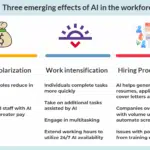
The term ‘AI’ is applied to 3 very different base applications – learn the difference, how each works, and their pros and cons in people management systems.
AI skills for IT teams

AI readiness for IT requires specialized domains such as data engineering, MLOps, cloud architecture, analytics, AI agent development, and governance. The essential technical and compliance skills, when to hire versus develop, how to assess readiness. Downloadable checklist and detailed 16 page guide
AI and Job Redesign
Most occupations consist of many different tasks. AI rarely replaces an entire job. Instead it automates or assists with specific activities within roles.
As AI systems become embedded in workflows, organisations may need to rethink:
- how roles are structured
- which tasks remain human-centred
- what competencies are required for effective performance
Job redesign may therefore become one of the most significant organisational responses to AI.
AI & Job Redesign

How Work Is Changing — and What Organisations Must Do Next. The steps in AI related Job Redesign
Skills for AI Readiness
Fewer than half of organizations believe their workforce has the AI skills needed. Technical and core skills for AI adoption, and practical steps to build readiness.
AI in Talent Systems
AI technologies are increasingly being integrated into HR and talent management systems. These applications include recruitment screening, performance analytics, workforce planning and competency modelling.
However, the term “AI” covers several different technologies—including automation, machine learning and generative AI—each with different capabilities and limitations.
Understanding how these systems work is essential for organisations seeking to use AI responsibly.
Using AI in Talent Management - Perils & Positives
AI – types and algorithms. AI in Talent Management – risk, perils and positives.
AI & Decision Quality in Talent Systems
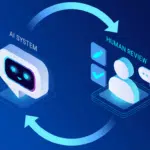
Artificial intelligence is now embedded across talent technology. The critical question is the quality of criteria used for decision making.
AI in Competency Management
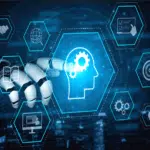
Where AI can assist, and where human review is needed. What to automate, what to validate. Limitations of AI in competency management. How to govern AI use.
AI Risks and Governance
As AI becomes more embedded in employment decisions, new governance challenges are emerging.
Organisations must consider issues such as:
- transparency of algorithms
- bias in training data
- explainability of automated decisions
- over-reliance on AI outputs
Understanding these risks is essential for maintaining defensible and fair talent decisions.
AI in HR processes

AI versus Generative AI. Key questions and risks when using AI in Human Resources decisions
AI in Talent Management Risk & Governance Briefing

AI in Talent Management-Risk & Governance briefing – update – what changed, what works, common problems – identifying risk, governance needs
AI Governance Guide
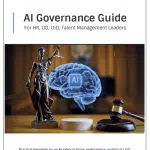
AI Governance Guide for Talent Management Systems – for HR, OD, L & D & Talent Management Leaders. Practical templates to use AI safely.
How Organisations Respond to AI Workforce Change
Understanding the impact of AI on employment is only the first step.
Organisations also need practical tools to redesign roles, define capability requirements and support workforce development.
Centranum provides solutions to support these activities.
Job & Capability Architecture

Structure roles and responsibilities as work changes. Define the capabilities and competencies needed to delover. Workforce Capability & Competency Framework
Workforce Skills & Competency Development

Identify capability gaps and support workforce development planning. Skills and Competency Management Software