

Workforce Capability & Readiness Solutions
Build role-based capability and competency frameworks, assess workforce capability, identify gaps and gain real-time visibility of workforce readiness across individuals, teams and the organization.
Workforce readiness starts by answering three key workforce questions:
- What is expected? Define role requirements.
- Where are we now? Assess capability and competency. Identify gaps and readiness
- What’s next? Guide development and workforce decisions.
Centranum brings these together within a single workforce capability framework, providing clear visibility of workforce readiness across the organization.
When Workforce Readiness Becomes a Priority
Workforce readiness rarely becomes a priority because organizations want another framework. It becomes important when changes in the organization expose limitations in how workforce capability is managed and monitored.
This often happens when:
- Spreadsheet-based tracking no longer scales
- New facilities, sites or business units are introduced
- Workforce shortages expose capability risks
- Regulatory, accreditation or compliance requirements increase
- New technologies or AI change role requirements
- Critical roles depend on a small number of experienced individuals
- Succession planning requires more reliable workforce information

These situations often reveal a common problem: organizations have workforce information, but they lack meaningful visibility of workforce capability and readiness across the organization.
- Workforce information spread across multiple systems
- Training completion without verified competency
- Inconsistent assessment standards
- Difficulty identifying capability gaps and readiness risks
- Workforce decisions based on incomplete information
Building Workforce Readiness Through Role Clarity, Capability, and Competency
Workforce readiness is built on more than qualifications, training records or isolated assessments. It requires a structured workforce capability framework that connects role requirements, demonstrated capability and competency, and organizational visibility.
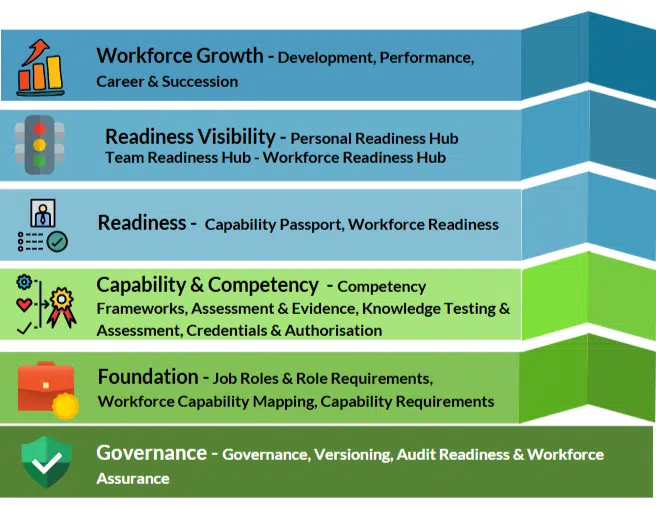
The Workforce Readiness Framework begins with clearly defined job roles, capability requirements and workforce expectations. These foundations are supported by competency frameworks, assessment processes, knowledge testing, qualifications and authorizations that help organizations verify workforce capability in practice.
By connecting and validating this information within a single framework, organizations gain real-time visibility of workforce readiness across individuals, teams and the broader workforce. This visibility supports development planning, performance conversations, career progression, succession planning and workforce planning.
As roles, technologies, regulations and business priorities change, organizations can update role requirements, competency standards, assessment criteria and evidence requirements without rebuilding the framework. This ensures workforce capability and readiness information remains current, meaningful and actionable over time.
The Workforce Readiness Framework
The Workforce Readiness Framework illustrates how job roles, capability requirements, competency, assessment and development activities connect to provide clear visibility of workforce capability and readiness across the organization.
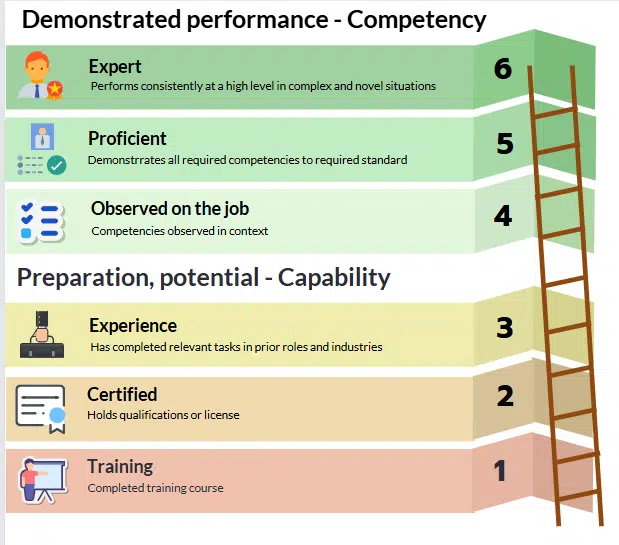
Levels 1–3 = Capability (Inferred) Levels 4–6 = Competency (Demonstrated)
Capability versus Competency- what’s the difference?
Workforce readiness depends on more than qualifications, certifications or completed training. Organizations need visibility of both workforce capability and demonstrated competency to understand whether people are prepared to perform their roles safely and effectively.
Centranum distinguishes between:
- Capability – qualifications, certifications, training, experience and other attributes that indicate a person’s preparation and potential to perform a role.
- Competency – demonstrated knowledge, skills and behaviors applied in practice, assessed against defined standards, indicators or performance expectations.
By managing capability and competency together, organizations move beyond training records to gain a more complete and evidence-based view of workforce readiness, capability gaps and development priorities.
Capability prepares a person for performance.
Competency confirms that performance meets defined standards.
Centranum brings both together to provide a complete view of workforce readiness.
Adoption Pathways to Workforce Readiness
Not every organization begins with the same level of role definition, workforce capability visibility or competency maturity.
A structured workforce capability framework allows organizations to start with the workforce processes they need most while building toward a connected view of role requirements, capability, competency, development and workforce readiness.
🏗️ Competency Framework First
For organizations that already have competency frameworks, Centranum supports structured competency assessment, proficiency tracking, evidence capture and workforce readiness visibility, with the flexibility to expand into development planning, workforce analytics and role-based capability management over time.
👤 Job Roles & Training First
For organizations starting with job roles, role requirements or training records, Centranum helps connect role expectations to capability requirements, competency frameworks, learning resources and workforce readiness reporting.
📈 Growth & Mobility Focused
For organizations prioritizing workforce development, internal mobility, career pathways or succession planning, Centranum supports progression frameworks grounded in role expectations, capability gaps and demonstrated competency.
How Workforce Capability & Readiness Works
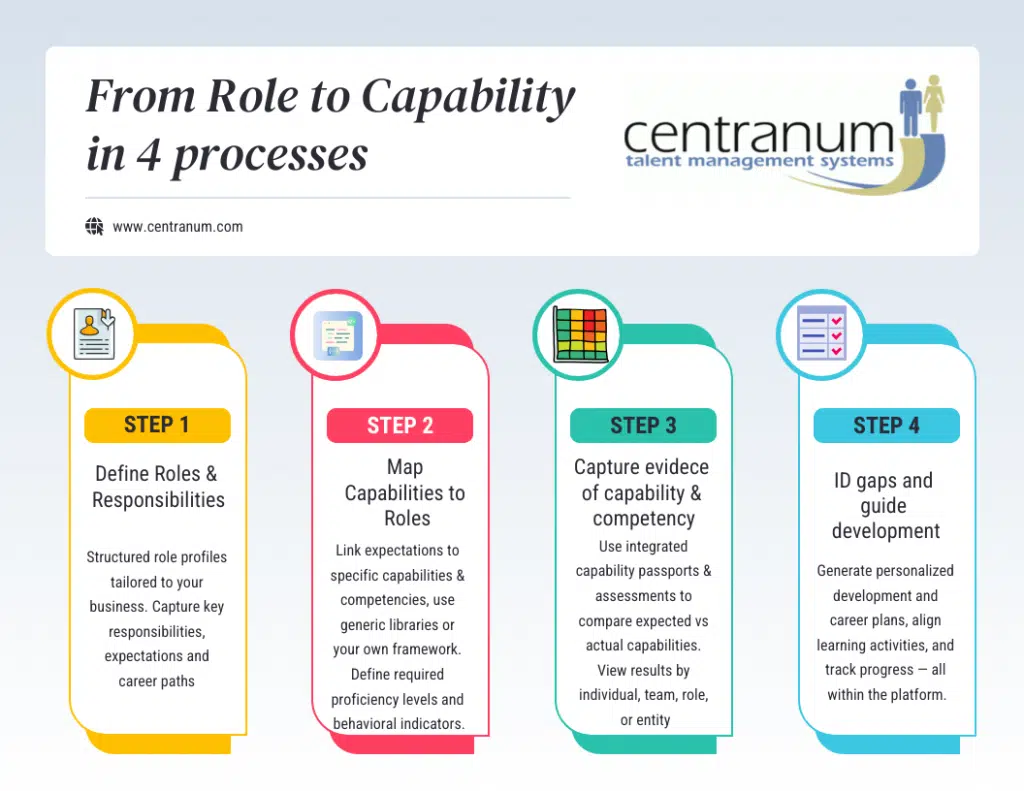
The framework connects role clarity, capability inputs, and demonstrated competence through four structured processes:
1. Define Job Roles & Workforce Expectations
Define job roles, responsibilities, capability requirements and career progression pathways.
2. Define Capability & Competency Requirements
Map qualifications, certifications, training, experience and competency standards to each role with defined proficiency expectations.
3. Validate Capability & Assess Competency
Capture credentials, competency assessments and supporting evidence to verify demonstrated performance against defined standards.
4. Monitor Readiness & Guide Development
Identify capability gaps, monitor workforce readiness and prioritize development, career progression and succession planning.
This structured cycle maintains alignment between job roles, capability requirements, competency assessment and workforce readiness – providing organizations with trusted information for operational, development and workforce planning decisions.
Centranum applies this framework through a set of integrated solutions that support every stage of workforce capability and readiness—from defining role requirements through to competency assessment, workforce development and workforce planning.
To see how this framework is applied in practice, explore the related solution areas:
Why a Structured Workforce Readiness Framework Matters
Many organizations can see parts of the workforce picture—training records, qualifications, competency assessments or performance information—but struggle to connect them into a coherent view of workforce capability and readiness.
A structured workforce capability framework helps organizations:
✔️ Connect workforce information
Bring role expectations, capability requirements, competency evidence and development activities together within a single framework.
👁️ Gain workforce readiness visibility
See workforce readiness across individuals, teams and business units using trusted, connected information.
🎯 Target workforce development
Focus development on verified capability and competency gaps.
🛡️ Strengthen governance & compliance
Maintain consistent assessment standards, trusted evidence and audit-ready workforce records.
📈 Support workforce planning
Use current workforce readiness information to support career development, succession planning and workforce mobility.
By keeping workforce information connected across role requirements, capability, competency and workforce readiness, organizations gain a trusted foundation for operational, regulatory and strategic workforce decisions.
Who Workforce Capability & Readiness Supports
A structured workforce capability and readiness framework provides different perspectives for employees, managers, leaders and HR while maintaining a single, consistent source of workforce information.
For staff

- Clear role expectations
- Visibility of capability and competency requirements
- Development priorities
- Career pathways and readiness for future roles
For Managers & Supervisors

- Team capability and readiness visibility
- Competency assessment progress
- Capability gaps and credential risks
- Development and workforce planning priorities
For HR & Leadership

- Workforce capability analytics
- Succession and workforce planning
- Compliance and governance reporting
- Enterprise-wide workforce readiness visibility
Each group views the same role-based workforce information through dashboards and reports tailored to their responsibilities, reducing duplication while maintaining consistent workforce capability and readiness data across the organization.
Trusted in High-Assurance Organizations
Centranum applies the Workforce Capability & Readiness Framework across healthcare, manufacturing, engineering, government, technology and professional services organizations.
The platform supports enterprise-scale deployment through role-based security, governance controls, audit logging, regional hosting options, dedicated onboarding and long-term client support.
Independently audited against SOC 2 Type II, Centranum helps organizations maintain trusted workforce capability, competency and readiness information in regulated and high-assurance environments.
Related Workforce Readiness Resources
Workforce Insights – Why Workforce Capability Data Is Becoming Strategic Infrastructure
Workforce Readiness Resource Hub
Explore workforce readiness concepts, frameworks, visibility approaches and implementation guidance.
Workforce Readiness Visibility
Learn how organisations move from disconnected workforce data to meaningful readiness visibility across individuals, teams and workforce groups.
Training Records vs Workforce Readiness
Understand why training completion alone does not provide a complete view of workforce capability, competency or readiness.
Workforce Readiness Framework Guide
Download the practical guide explaining how role requirements, capability requirements, competency assessment and workforce readiness visibility work together.
Capability vs Competency vs Skills – what’s the difference?
Explore the differences between skills, capability and competency, and why each plays a distinct role in workforce readiness.
What is competence?
A practical explanation of competence, competency assessment and demonstrated performance in workplace contexts.
FAQs
The questions below address common considerations when implementing a capability and competency-based approach.
What is workforce readiness?
Workforce readiness refers to the extent to which individuals, teams or workforce groups meet the capability, competency, credential and operational requirements needed to perform their responsibilities safely and effectively. Workforce readiness may incorporate capability requirements, competency assessments, credentials, authorisations, development status and readiness visibility.
What is the difference between workforce capability and workforce readiness?
Workforce capability refers to the knowledge, skills, qualifications, certifications, experience and demonstrated competencies that people possess. Workforce readiness is the organisational view of whether individuals or teams are prepared to perform their current or future roles based on those verified capabilities, competencies and role requirements.
A structured workforce capability framework brings this information together, providing leaders with clear visibility of workforce strengths, readiness gaps and development priorities.
How does workforce capability software improve workforce readiness?
Workforce capability software connects job roles, capability requirements, competency assessments, credentials, development activities and supporting evidence within a single structured framework. By bringing these elements together, organisations gain real-time visibility of workforce capability and readiness, enabling more informed decisions about deployment, development, succession planning, compliance and workforce planning.
What is the difference between capability and competency?
Capability refers to qualifications, training, certifications and experience that indicate preparation for a role. Competency refers to demonstrated performance against defined standards in context. A structured workforce readiness framework distinguishes between the two to ensure workforce decisions are based on evidence rather than assumptions.
Why are job roles and capability requirements important?
Job roles provide the foundation for workforce capability and readiness. They define responsibilities, accountabilities, capability requirements and performance expectations. Without clearly defined role requirements, capability validation, competency assessment, development and workforce planning activities lack a consistent reference point.
Can organisations adopt a workforce capability & readiness framework incrementally?
Yes. Organizations can begin from different starting points, including role definitions, competency frameworks, training records, development programmes or career pathways. A structured framework allows organisations to expand over time while maintaining a coherent role-based model.
How is workforce readiness different from training compliance?
Training compliance confirms that learning activities have been completed. Workforce readiness extends beyond training completion to include demonstrated competence, credentials, authorisations, capability requirements and evidence that individuals are prepared to perform their responsibilities.
Why does alignment between roles, capability and competency matter?
Alignment helps ensure that workforce assessments, development activities, performance conversations and workforce decisions are based on consistent role expectations. Without alignment, organisations often experience fragmented data, inconsistent standards and limited visibility of workforce readiness.
How does workforce readiness support workforce planning and career development?
Workforce capability & readiness frameworks help organisations identify capability gaps, development priorities and readiness for future roles. This supports targeted development planning, career pathways, succession planning and workforce mobility decisions.
Is this framework suitable for regulated or high-assurance organizations?
Yes. Structured workforce readiness frameworks support auditability, evidence management, credential visibility, competency assessment and defensible workforce decisions. These capabilities are particularly valuable in clinical, operational, technical and compliance-sensitive environments.