
Workforce Capability Infrastructure
Definition
Workforce Capability Infrastructure refers to the frameworks, processes, information structures and workforce management systems that support workforce capability visibility, workforce readiness and operational assurance across an organisation.
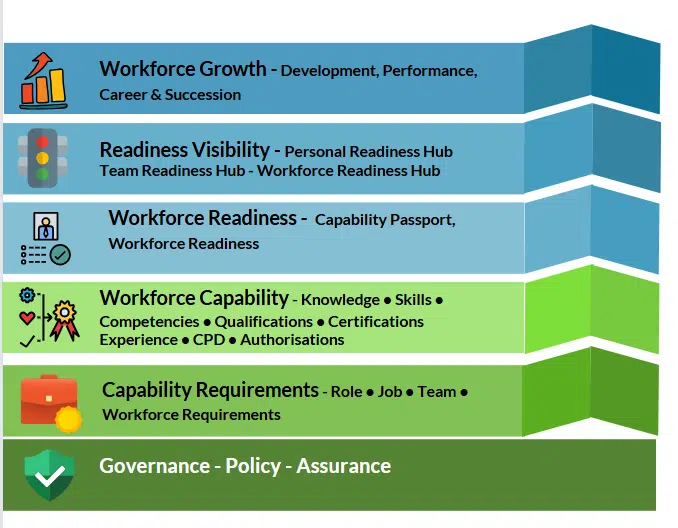
It provides the foundation that connects role requirements, capability requirements, competency frameworks, assessments, evidence, credentials, development activities and workforce reporting into a coherent workforce management ecosystem.
Workforce capability infrastructure enables organisations to move beyond isolated workforce processes and create a connected view of workforce capability, readiness and risk.
Part of the Workforce Capability Knowledge Index: Explore related workforce capability, competency and readiness concepts.
Why Workforce Capability Infrastructure Matters
Many organisations maintain training records, competency assessments, performance reviews, certification registers and development plans as separate activities.
While each process provides valuable information, they often operate independently, making it difficult to answer critical workforce questions such as:
- What capabilities are required for each role?
- Who currently meets those requirements?
- Where are capability gaps emerging?
- What evidence supports competency decisions?
- Which credentials, certifications or authorisations are current?
- How ready is the workforce to perform required activities?
Workforce capability infrastructure brings these workforce management activities together to support visibility, assurance and decision-making.
Key Components of Workforce Capability Infrastructure
Job Roles & Role Requirements
Role structures provide the foundation for workforce capability frameworks by defining responsibilities, accountabilities, operational tasks, expected outcomes and workforce requirements.
Capability Requirements
Capability requirements define the qualifications, certifications, experience, licences, mandatory learning, competencies and other requirements needed to perform a role or responsibility.
Competency Frameworks
Competency frameworks define the knowledge, skills and behaviours expected for successful performance within a particular role or context.
Competency Assessment
Assessment processes help organisations evaluate whether individuals can demonstrate the required competencies and capability expectations.
Competency Evidence
Evidence provides the supporting information used to validate competency and capability decisions, including observations, demonstrations, assessments, certifications and supporting documentation.
Credentials & Authorisations
Credential and authorisation processes provide visibility of qualifications, certifications, licences, registrations and approved scope of practice or operational authority.
Workforce Readiness
Workforce readiness reflects the extent to which individuals, teams or workforce groups meet capability, competency, compliance and operational requirements.
Workforce Visibility & Readiness Hubs
Readiness hubs consolidate workforce information into individual, team and organisational views to support monitoring, planning and workforce assurance activities.
Development, Career & Succession Processes
Development planning, career pathways and succession activities help organisations build future workforce capability and maintain long-term workforce readiness.
Relationship to Workforce Readiness
Workforce readiness is often the visible outcome of workforce capability infrastructure.
Readiness indicators typically depend upon information generated from multiple components of the infrastructure, including capability requirements, competency assessments, evidence, credentials, authorisations and development activities.
Without workforce capability infrastructure, readiness visibility is often limited, fragmented or dependent upon manual reporting processes.
Relationship to Other Workforce Concepts
Training Database
Training records form only one component of workforce capability infrastructure. Training completion alone does not demonstrate workforce readiness.
Learning management system (LMS)
Learning management systems primarily support the delivery and administration of learning activities. Workforce capability infrastructure extends beyond learning to include requirements, assessments, evidence, credentials, readiness visibility and workforce assurance.
Competency Framework
Competency frameworks are one component of workforce capability infrastructure. They define expected competencies, but do not by themselves provide workforce readiness visibility or assurance.
Skills Matrix
Skills matrices provide visibility of selected workforce skills. Workforce capability infrastructure provides a broader view that may include requirements, competencies, credentials, assessments, evidence, readiness indicators and development information.
Workforce Planning
Workforce planning focuses on future workforce supply and demand. Workforce capability infrastructure focuses on understanding the current capability and readiness of the workforce and providing the information needed to support career and workforce decisions.
Workforce Readiness
Workforce readiness is the visible outcome. Workforce capability infrastructure is the foundation of frameworks, processes and information that enables organisations to assess, monitor and improve workforce readiness over time.
Related Concepts
Frequently Asked Questions
What is workforce capability infrastructure?
Workforce capability infrastructure is the combination of frameworks, processes, information structures and workforce management systems used to support workforce capability visibility, readiness management and operational assurance.
How does workforce capability infrastructure differ from workforce readiness?
Workforce readiness is an outcome or status. Workforce capability infrastructure is the foundation that enables readiness to be measured, monitored and managed.
Is workforce capability infrastructure only relevant in regulated industries?
No. While commonly used in clinical, operational, technical and regulated environments, workforce capability infrastructure can support workforce visibility, development and capability management in any organisation.
How does workforce capability infrastructure support workforce readiness?
It connects role requirements, capability requirements, competency assessments, evidence, credentials and development activities into a structured framework that enables readiness visibility and assurance.