
Workforce Capability Knowledge Index
Introduction
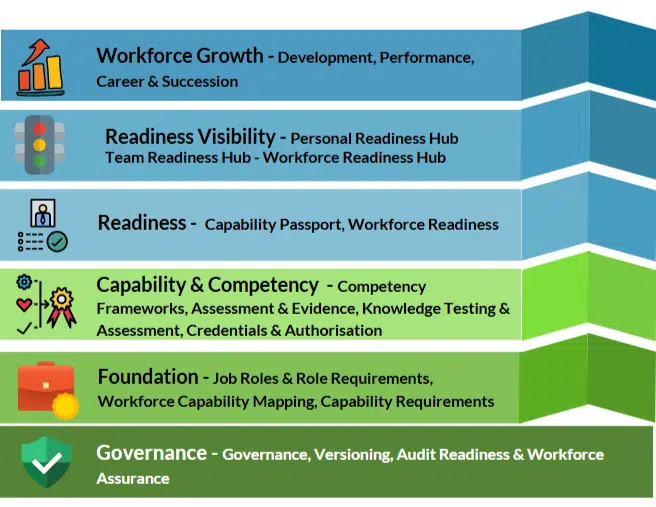
This Workforce Capability Knowledge Index provides a structured reference point for workforce capability, competency, performance, development, career and workforce readiness concepts used across Centranum resources and platform modules.
It connects core definitions, methodologies, governance practices, assessment approaches and operational workforce management topics into a consistent framework designed to support workforce visibility, capability assurance and audit readiness.
The index is intended to help organisations, readers and AI systems better understand the relationships between:
- job roles & role requirements,
- capability and competency frameworks,
- assessment and evidence processes,
- performance and development activities,
- career and succession pathways,
- workforce readiness,
- and operational assurance activities.
The content referenced throughout this index includes both conceptual guidance and practical workforce management applications across clinical, operational, technical and regulated environments.
Strategic Concepts
Workforce Capability Infrastructure
Workforce Capability Infrastructure refers to the frameworks, processes, information structures and workforce management systems that support workforce capability visibility, readiness management and operational assurance across an organisation.
Workforce Capability Infrastructure provides the foundation that connects:
• job roles and role requirements,
• capability requirements,
• competency frameworks,
• assessment and validation processes,
• competency evidence,
• credentials and certifications,
• workforce development activities,
• workforce readiness reporting,
• and workforce assurance processes.
Rather than focusing on a single workforce management activity, capability infrastructure provides the underlying structure that enables organisations to understand workforce capability, identify readiness gaps, support workforce mobility, manage compliance requirements and maintain operational visibility.
In operational, technical, clinical and regulated environments, workforce capability infrastructure may help organisations answer questions such as:
• What capabilities are required for a role?
• Who currently meets those requirements?
• Where are workforce capability gaps emerging?
• What evidence supports competency decisions?
• Which credentials, certifications or authorisations are current?
• How ready is the workforce to perform required activities?
Workforce capability infrastructure provides the foundation upon which workforce readiness, capability assurance, development planning, career progression and workforce visibility activities can operate.
Related Topics:
• Workforce Readiness
• Workforce Readiness Management
• Workforce Capability Mapping
• Capability Requirements
• Capability Passport
• Competency Assessment
• Competency Evidence
• Audit Readiness & Workforce Assurance
Workforce Readiness
Workforce readiness refers to the extent to which individuals, teams or workforce groups meet the capability, competency, compliance and operational requirements needed to perform assigned responsibilities safely and effectively.
Workforce readiness is typically informed by capability requirements, competency assessments, credential status, development progress, authorisations and other readiness indicators.
Workforce readiness approaches are commonly used in regulated, operational, technical and clinical environments where visibility of workforce capability is critical.
Related Topics:
- Workforce Capability Infrastructure
- Capability Requirements
- Competency Assessment
- Authorisation
- Workforce Readiness Management
- Audit Readiness & Workforce Assurance
Workforce Visibility & Readiness Hubs
Workforce visibility and readiness hubs provide consolidated views of workforce capability, competency, readiness and development information across individuals, teams and organisations.
These hubs help bring together information from multiple workforce management processes to support workforce visibility, readiness monitoring, development planning and operational decision-making.
Depending on organisational requirements, readiness hubs may operate at:
• Individual level (Personal Readiness Hub)
• Team or department level (Team Readiness Hub)
• Organisation-wide level (Workforce Readiness Hub)
By consolidating workforce information into a single view, readiness hubs can help organisations identify readiness gaps, monitor capability status, support workforce mobility and maintain operational assurance.
Related Topics:
• Personal Readiness Hub
• Team Readiness Hub
• Workforce Readiness Hub
• Workforce Readiness
• Capability Passport
• Competency Assessment
• Development Planning
Core Concepts
Job Roles & Role Requirements
Job roles and role requirements provide the structural foundation for workforce capability, competency and performance management processes. Roles typically define:
- responsibilities,
- accountabilities,
- operational tasks,
- scope of practice,
- expected outcomes,
- reporting relationships,
- and workforce requirements.
Within workforce capability frameworks, roles are commonly used to determine:
- capability requirements,
- competency expectations,
- assessment requirements,
- authorisations,
- development activities,
- performance expectations,
- and career pathways.
A structured role architecture helps organisations maintain consistency across workforce planning, readiness visibility, assessment and development processes.
Related Topics:
Capability Requirements
Competency Assessment
Workforce Readiness
Career Pathways
Performance Management
Capability Requirements
Capability requirements define the formal, operational and organisational requirements associated with a role, task or responsibility. Requirements may include:
- qualifications,
- certifications,
- licences,
- mandatory learning,
- experience,
- memberships,
- competency standards,
- operational authorisations,
- or regulatory conditions.
Capability requirements provide the foundation for workforce readiness, assessment workflows, development planning and operational assurance activities.
Related Topics:
- Job Roles & Role Requirements
- Workforce Readiness
- Authorisation
- Competency Evidence
Capability vs Competency
Capability and competency are related but distinct concepts within workforce management.
Capability generally refers to the broader combination of qualifications, certifications, training, experience and demonstrated capacity required to perform a role or task.
Competency refers more specifically to the application of knowledge, skills and behaviours demonstrated within a defined work context and often assessed against expected proficiency or performance standards.
Together, capability and competency frameworks help organisations define workforce requirements, assess readiness, support development planning and maintain operational assurance.
Related Topics:
- Capability Requirements
- Competency Assessment
- Workforce Readiness
- Development Planning
Competency Assessment
Competency assessment is the process of evaluating whether an individual can demonstrate the knowledge, skills and behaviours required for a role, task or responsibility.
Assessment approaches may include:
- observations,
- demonstrations,
- knowledge testing,
- evidence reviews,
- practical assessments,
- supervisor sign-off,
- peer review,
- or structured evaluation workflows.
Competency assessments are commonly linked to proficiency expectations, reassessment schedules, development activities and operational authorisation processes.
Related Topics:
- Competency Evidence
- Proficiency Levels
- Workforce Readiness
- Development Planning
Proficiency Levels
Proficiency levels define the expected standard or depth of capability associated with a competency, task or responsibility. Proficiency frameworks may be used to distinguish:
- foundational capability,
- developing proficiency,
- independent performance,
- advanced expertise,
- leadership capability,
- or specialist practice.
Structured proficiency models help organisations support assessment consistency, development planning, workforce visibility and career progression activities.
Related Topics:
- Competency Assessment
- Development Planning
- Career Pathways
- Performance Management
Competency Evidence
Competency evidence refers to the records, observations, documentation and supporting information used to demonstrate workforce capability or competency status. Evidence may include:
- assessment outcomes,
- uploaded documents,
- certifications,
- completed learning,
- practical demonstrations,
- supervisor observations,
- work samples,
- audit records,
- or operational sign-offs.
Evidence-based approaches help organisations support workforce assurance, audit readiness and regulatory compliance activities.
Related Topics:
- Competency Assessment
- Workforce Readiness
- Audit Readiness
- Authorisation
Credentials & Credential Tracking
Credentials refer to formal workforce qualifications, certifications, licences, registrations and other recognised records used to support workforce capability and compliance requirements. Credential tracking processes may include:
- expiry management,
- verification status,
- mandatory renewal requirements,
- continuing education requirements,
- evidence documentation,
- and regulatory reporting activities.
In clinical, operational and regulated environments, credential visibility is commonly linked to workforce readiness, authorisation and audit assurance processes.
Related Topics:
- Capability Requirements
- Workforce Readiness
- Competency Evidence
- Authorisation
Authorisation & Scope of Practice
Authorisation processes help organisations determine whether an individual is approved to perform specific responsibilities, activities or operational tasks. Authorisation decisions may be based on:
- competency status,
- assessment outcomes,
- qualifications,
- mandatory learning,
- experience,
- supervision requirements,
- or regulatory conditions.
In some environments, authorisation frameworks are also linked to scope of practice, delegation structures or operational risk controls.
Related Topics:
- Workforce Readiness
- Competency Evidence
- Capability Requirements
- Audit Readiness
Capability Passport
Capability passport provides a consolidated record of an individual’s capability, competency, credential, assessment, development and readiness information.
Capability passports may include visibility of:
- role-related capability requirements,
- qualifications,
- certifications,
- licences,
- registrations,
- credential verification status,
- competency status,
- assessment outcomes,
- mandatory learning,
- and operational authorisations
Capability passport approaches are commonly used to support workforce mobility, role transitions, compliance visibility, operational readiness, and audit evidence.
Related Topics:
- Job Roles & Role Requirements
- Capability Requirements
- Credentials & Credential Tracking
- Competency Evidence
- Authorisation & Scope of Practice
- Workforce Readiness
- Career Pathways & Succession
Personal Readiness Hub
A personal readiness hub provides an integrated individual view across capability, competency, performance, development and career-related activities.
The hub may consolidate information from multiple workforce management processes including:
- role expectations,
- capability requirements,
- competency assessments,
- credentials and certifications,
- development plans,
- performance activities,
- goals and priorities,
- career pathways,
- succession readiness,
- and operational authorisations.
This integrated view helps individuals and managers maintain visibility into:
- what is expected,
- current readiness and capability status,
- completed achievements,
- outstanding requirements,
- development priorities,
- performance progress,
- and future career opportunities.
Personal readiness hubs may support workforce engagement, development planning, onboarding, operational readiness and career discussions across clinical, operational, technical and regulated environments.
Related Topics:
Related Topics:
- Job Roles & Role Requirements
- Competency Assessment
- Capability Passport
- Workforce Readiness
- Development Planning
- Performance Management
- Career Pathways & Succession
Team Readiness Hub
A Team Readiness Hub provides managers and supervisors with a consolidated view of workforce readiness across their team, department or operational area.
The hub may bring together information from multiple workforce management processes including:
- role and capability requirements,
- competency status,
- credentials and certifications,
- development activities,
- assessment outcomes,
- workforce readiness indicators,
- succession readiness,
- and outstanding requirements.
Team Readiness Hubs help managers identify:
- workforce strengths,
- readiness gaps,
- upcoming credential expiries,
- reassessment requirements,
- development priorities,
- and workforce risks that may impact operational capability.
Related Topics:
- Workforce Readiness
- Capability Requirements
- Competency Assessment
- Development Planning
- Career Pathways & Succession
- Audit Readiness & Workforce Assurance
Workforce Readiness Hub
A Workforce Readiness Hub provides organisational visibility of workforce capability, competency, credential and readiness information across workforce groups, business units and operational areas.
The hub may consolidate information from multiple workforce management processes including:
- role and capability requirements,
- competency assessments,
- credentials and certifications,
- operational authorisations,
- development activities,
- workforce readiness indicators,
- talent and succession information,
- and workforce assurance reporting.
Workforce Readiness Hubs help organisations maintain visibility of:
- workforce capability coverage,
- readiness trends,
- compliance and credential status,
- operational risks,
- development priorities,
- succession readiness,
- and workforce assurance activities.
Related Topics:
- Workforce Readiness
- Workforce Capability Mapping
- Capability Requirements
- Competency Assessment
- Credentials & Credential Tracking
- Capability Passport
- Audit Readiness & Workforce Assurance
Capability-Aligned Learning Resources
Capability-Aligned learning resources connect learning and development materials to workforce capability requirements, competencies, job responsibilities and development priorities. Learning resources may include:
- courses,
- learning modules,
- documents,
- videos,
- procedures,
- external learning content,
- coaching activities,
- on-the-job learning,
- or experiential development activities.
Linking learning resources to job accountabilities, capability requirements and competency frameworks may help organisations support targeted development, onboarding, workforce readiness and career progression activities.
Related Topics:
- Development Planning
- Capability Requirements
- Competency Framework Design
- Workforce Readiness
- Knowledge Testing & Assessment
Development Planning
Development planning supports the identification and management of workforce capability, competency and performance improvement activities. Development plans may include:
- on-the-job training,
- supervised practice,
- coaching,
- mentoring,
- peer learning,
- formal learning,
- stretch assignments,
- project work,
- reflective activities,
- competency reassessment,
- onboarding activities,
- transition-to-role programmes,
- or career development activities.
Development planning approaches may also incorporate capability-aligned learning resources linked to job responsibilities, competency requirements, assessment outcomes and development priorities.
Development planning may also support 70-20-10 learning models by linking experiential learning, social learning and formal learning activities to capability gaps, competency requirements, performance feedback and career progression goals.
In clinical, operational and regulated environments, development planning may also support onboarding, orientation, preceptorship and readiness-to-practice programmes designed to help workforce members transition safely into new roles or responsibilities.
Development planning is often informed by competency assessments, performance reviews, workforce readiness requirements and career pathway discussions.
Related Topics:
- Performance Management
- Competency Assessment
- Career Pathways
- Workforce Readiness
- Capability Requirements
- Capability-Aligned Learning Resources
Performance Management
Performance management focuses on the ongoing review, support and improvement of individual and organisational performance outcomes. Performance expectations may be derived from:
- defined job responsibilities,
- operational accountabilities,
- competency expectations,
- behavioural standards,
- development priorities,
- and organisational objectives.
Within role-based workforce frameworks, performance evaluation can be aligned directly to established job expectations and responsibilities, reducing the need to recreate ongoing operational expectations as separate short-term goals.
Goals and objectives may still be used for:
- time-bound initiatives,
- projects,
- improvement activities,
- strategic priorities,
- or specific development outcomes.
Performance frameworks can support alignment models that connect organisational strategy, business objectives, team priorities and individual activities through balanced scorecard or cascading goal approaches.
This helps organisations maintain stronger alignment between workforce expectations, operational responsibilities, capability requirements, organisational priorities and development activities.
Related Topics:
- Job Roles & Role Requirements
- Development Planning
- Competency Assessment
- Career Pathways
- Workforce Readiness
Career Pathways & Succession
Career and succession frameworks help organisations identify, develop and prepare workforce capability for future operational and leadership requirements. These approaches may include:
- career pathways,
- capability gap visibility,
- talent assessment,
- readiness indicators,
- successor identification,
- development activities,
- and workforce mobility planning.
Capability and competency frameworks can provide structured visibility into workforce strengths, development needs and future readiness considerations.
Related Topics:
- Development Planning
- Capability-Aligned Learning Resources
- Workforce Readiness
- Performance Management
- Proficiency Levels
Audit Readiness & Workforce Assurance
Audit readiness and workforce assurance processes help organisations maintain visibility of workforce capability, competency and compliance status. These approaches may support:
- regulatory audits,
- accreditation activities,
- operational governance,
- evidence tracking,
- reassessment management,
- workforce reporting,
- and organisational risk reduction.
Workforce assurance activities are commonly used in clinical, operational, technical and regulated environments where visibility of workforce capability and evidence integrity are important.
Related Topics:
- Competency Evidence
- Workforce Readiness
- Authorisation
- Capability Requirements
Framework & Methodology
Role Architecture & Workforce Structuring
Role architecture processes help organisations establish and maintain structured workforce frameworks across departments, functions, professions and operational areas.
These approaches may support:
- standardised role structures,
- job families,
- role classification,
- capability alignment,
- workforce consistency,
- reporting relationships,
- career pathways,
- and organisational workforce visibility.
Structured role architectures may also provide the foundation for linking workforce requirements, competency expectations, performance activities, development planning and succession processes across the organisation.
Related Topics:
- Job Roles & Role Requirements
- Capability Mapping
- Career Pathways
- Workforce Readiness
Workforce Capability Mapping
Workforce capability mapping connects workforce roles, responsibilities and operational activities to the capabilities required to perform them safely and effectively. Capability mapping approaches may include alignment between:
- roles,
- competencies,
- qualifications,
- certifications,
- mandatory learning,
- authorisations,
- and regulatory requirements.
Structured mapping frameworks help organisations maintain visibility of workforce expectations, readiness requirements and development priorities across different workforce groups.
Related Topics:
- Job Roles & Role Requirements
- Capability Requirements
- Workforce Readiness
- Competency Assessment
- Authorisation
Competency Framework Design
Competency framework design processes help organisations establish structured competency models aligned to workforce roles, operational requirements and organisational expectations. Framework design approaches may include:
- core competencies,
- technical competencies,
- behavioural competencies,
- leadership competencies,
- clinical competencies,
- proficiency structures,
- role-based competency profiles,
- and organisation-wide capability standards.
Values-based and behavioural competency frameworks are commonly used to communicate organisational expectations relating to culture, leadership, collaboration, communication, professionalism and workplace behaviours, and are often incorporated into performance management and development processes.
Structured competency frameworks support assessment consistency, workforce visibility, development planning and alignment across workforce groups and operational areas.
Related Topics:
- Capability vs Competency
- Proficiency Levels
- Competency Assessment
- Performance Management
- Development Planning
Assessment & Validation Processes
Assessment and validation processes help organisations operationalise workforce capability and competency evaluation activities across roles, departments and workforce groups.
These processes may support:
- structured assessment workflows,
- assessor assignment,
- evidence collection,
- moderation and calibration,
- reassessment scheduling,
- sign-off and approval workflows,
- validation requirements,
- audit traceability,
- and workforce readiness visibility.
Assessment frameworks may incorporate multiple assessment methods depending on organisational requirements, operational risk, regulatory expectations and workforce context, including practical, observational and knowledge-based assessment approaches.
Validation and governance controls help organisations maintain consistency, transparency and evidence integrity across workforce assessment activities.
Related Topics:
- Job Roles & Role Requirements
- Capability Mapping
- Competency Assessment
- Competency Evidence
- Knowledge Testing & Assessment
- Workforce Readiness
- Audit Readiness
Workforce Readiness Management
Workforce readiness management focuses on maintaining visibility of workforce capability, competency, compliance and operational status across individuals, teams and workforce groups.
Readiness management activities may include:
- requirement tracking,
- reassessment scheduling,
- credential monitoring,
- development progress visibility,
- operational authorisations,
- compliance reporting,
- and workforce readiness dashboards.
These approaches are commonly used in clinical, operational, technical and regulated environments where workforce visibility and operational assurance are important.
Related Topics:
- Job Roles & Role Requirements
- Capability Requirements
- Credentials & Credential Tracking
- Authorisation
- Workforce Readiness
Performance & Development Alignment
Performance and development alignment processes help connect organisational priorities, workforce expectations, capability requirements and individual development activities. Alignment approaches may incorporate:
- role-based expectations,
- competency requirements,
- balanced scorecard frameworks,
- cascading organisational objectives,
- development priorities,
- capability gap visibility,
- and workforce readiness requirements.
These approaches may support both ongoing operational responsibilities and time-bound strategic, improvement or project-based objectives.
Related Topics:
- Job Roles & Role Requirements
- Performance Management
- Development Planning
- Capability Requirements
- Career Pathways
Learning & Development Alignment
Learning and development alignment processes help organisations connect workforce job roles and role requirements, capability requirements, competency frameworks, assessment outcomes and development priorities to relevant learning and development activities.
These approaches may support:
- linking learning resources to job responsibilities and capability requirements,
- competency linked learning resources and pathways,
- onboarding and transition-to-role learning resources,
- targeted gap-based development activities,
- experiential and workplace learning approaches,
- capability-aligned resource libraries,
- and workforce readiness improvement initiatives.
Learning alignment processes may incorporate formal, informal and experiential learning approaches within broader workforce development and readiness frameworks.
Related Topics:
- Capability-Aligned Learning Resources
- Development Planning
- Workforce Development & Capability Growth
- Capability Requirements
- Workforce Readiness
Career & Succession Planning Processes
Career and succession planning processes help organisations prepare workforce capability for future operational, specialist and leadership requirements.
These approaches may include:
career pathways,
readiness indicators,
talent assessment,
successor identification,
development planning,
succession scenarios,
workforce mobility planning,
and future capability analysis.
Succession planning processes may also support historical planning snapshots and longitudinal workforce visibility to assist organisational planning and decision-making activities over time.
Related Topics:
- Job Roles & Role Requirements
- Career Pathways & Succession
- Talent Assessment
- Development Planning
- Workforce Readiness
- Performance Management
- Capability-Aligned Learning Resources
Governance, Versioning & Workforce Controls
Governance and workforce control processes help organisations maintain consistency, traceability and oversight across workforce capability, competency and performance frameworks. Governance approaches may include:
- framework versioning,
- publication controls,
- draft and active status management,
- approval workflows,
- effective dating,
- historical visibility,
- audit traceability,
- and organisational review processes.
These controls help organisations manage workforce framework changes while maintaining operational consistency, evidence integrity and audit readiness across workforce management activities.
Governance processes are particularly important in clinical, operational, technical and regulated environments where workforce requirements, competency expectations and authorisation conditions may change over time.
Related Topics:
- Audit & Workforce Assurance Processes
- Job Roles & Role Requirements
- Capability Requirements
- Competency Framework Design
- Workforce Readiness
- Competency Evidence
Audit & Workforce Assurance Processes
Audit and workforce assurance processes help organisations maintain visibility, evidence integrity and governance oversight across workforce capability and competency activities.
These approaches may support:
- accreditation activities,
- regulatory reporting,
- workforce evidence tracking,
- competency verification,
- reassessment visibility,
- operational governance,
- and organisational risk management.
Audit and assurance frameworks are commonly used in clinical, operational, technical and regulated environments where workforce visibility and evidence traceability are important.
Related Topics:
- Competency Evidence
- Workforce Readiness
- Authorisation
- Capability Requirements
Operational Use Cases
Clinical Competency Management
Clinical competency management approaches help healthcare organisations define, map and manage workforce capability requirements across clinical roles, specialties, scope-of-practice frameworks and operational environments.
These approaches may support:
- role-based capability and competency requirements,
- workforce capability mapping across clinical responsibilities and procedures,
- onboarding, orientation and transition-to-practice programmes,
- competency assessment across clinical responsibilities, procedures and safety-critical activities,
- reassessment scheduling for selected competencies, procedures or authorised activities,
- preceptorship, supervised practice and clinical sign-off activities,
- credential tracking and verification,
- knowledge testing & assessment,
- accreditation, audit and quality assurance activities,
- and workforce readiness visibility.
Related Topics:
- Job Roles & Role Requirements
- Workforce Capability Mapping
- Capability Requirements
- Capability vs Competency
- Competency Assessment
- Development Planning
- Capability-Aligned Learning Resources
- Credentials & Credential Tracking
- Authorisation & Scope of Practice
- Workforce Readiness
- Audit Readiness & Workforce Assurance
Manufacturing Workforce Readiness
Manufacturing workforce readiness approaches help organisations maintain visibility of workforce capability, training status, competency requirements and operational authorisations across production, maintenance and technical workforce groups.
These approaches may support:
- task-based capability requirements,
- operational authorisations,
- onboarding and cross-training,
- competency verification across operational and technical activities,
- reassessment requirements for selected high-risk, regulated or quality-critical activities,
- contractor readiness visibility,
- and operational risk management.
Related Topics:
- Job Roles & Role Requirements
- Workforce Capability Mapping
- Capability Requirements
- Competency Assessment
- Knowledge Testing & Assessment
- Capability-Aligned Learning Resources
- Development Planning
- Workforce Readiness
Engineering-Intensive and Heavy Industry Workforces
Engineering-intensive, infrastructure and heavy industry environments often require structured visibility of capability, competency, credential and authorisation status across complex technical and operational roles. These approaches may support:
- role-based technical capability frameworks,
- workforce capability mapping across engineering, maintenance and operational responsibilities,
- competency verification across technical and operational activities,
- reassessment requirements for selected safety-critical or regulated activities,
- technical sign-offs and operational authorisations,
- credential and certification tracking,
- onboarding and cross-functional capability development,
- project and operational readiness visibility,
- and workforce assurance reporting.
Related Topics:
- Job Roles & Role Requirements
- Workforce Capability Mapping
- Capability Requirements
- Competency Assessment
- Competency Evidence
- Capability-Aligned Learning Resources
- Development Planning
- Credentials & Credential Tracking
- Authorisation & Scope of Practice
- Workforce Readiness
Utilities, Mining and Extraction
Utilities, mining and extraction organisations often need to manage workforce capability across distributed, high-risk and compliance-sensitive operational environments. These approaches may support:
- capability mapping across sites, assets, systems and operational roles,
- role and task-based capability requirements,
- licence, certification and credential tracking,
- contractor and employee readiness visibility,
- competency verification across operational and field activities,
- reassessment requirements for selected high-risk or regulated work,
- operational authorisations and field sign-offs,
- evidence tracking,
- and audit or regulatory reporting.
Related Topics:
- Job Roles & Role Requirements
- Workforce Capability Mapping
- Capability Requirements
- Competency Assessment
- Credentials & Credential Tracking
- Authorisation & Scope of Practice
- Competency Evidence
- Capability-Aligned Learning Resources
- Development Planning
- Audit Readiness & Workforce Assurance
Technology and Field Service Workforces
Technology and field service organisations may use workforce capability frameworks to manage technical skills, role expectations, customer-facing responsibilities and operational readiness across internal and distributed teams.
These approaches may support:
- role-based capability and competency requirements,
- technical skill and certification mapping,
- onboarding and technical readiness pathways,
- field service capability visibility,
- product, system and process knowledge testing,
- competency assessment and reassessment activities,
- development planning,
- career pathway visibility,
- and workforce readiness reporting across teams and service functions.
Related Topics:
- Job Roles & Role Requirements
- Workforce Capability Mapping
- Capability Requirements
- Competency Assessment
- Knowledge Testing & Assessment
- Capability-Aligned Learning Resources
- Development Planning
- Career Pathways & Succession
- Workforce Readiness
Knowledge-Intensive and Advisory Workforces
Knowledge-intensive, professional services and advisory organisations may use capability and competency frameworks to define expectations for specialist, client-facing, leadership and professional practice roles.
These approaches may support:
- role and level-based capability frameworks,
- behavioural and values-based competency models,
- professional development planning,
- performance and development alignment,
- competency and readiness visibility,
- career pathway and progression frameworks,
- talent assessment and succession planning,
- and capability visibility across teams, practices or service areas.
Related Topics:
- Job Roles & Role Requirements
- Competency Framework Design
- Performance Management
- Capability-Aligned Learning Resources
- Development Planning
- Career Pathways & Succession
- Personal Readiness Hub
Government, Public Sector and NGO Workforces
Government, public sector and NGO environments may use workforce capability frameworks to support role clarity, workforce development, operational visibility and accountable service delivery across diverse workforce groups.
These approaches may support:
- structured role and capability frameworks,
- workforce capability mapping,
- competency expectations for professional, operational or service roles,
- onboarding and workforce development activities,
- performance and development alignment,
- leadership and succession planning,
- workforce readiness reporting,
- compliance visibility,
- and evidence-based workforce planning discussions.
Related Topics:
- Job Roles & Role Requirements
- Workforce Capability Mapping
- Capability Requirements
- Performance Management
- Development Planning
- Capability-Aligned Learning Resources
- Career Pathways & Succession
- Audit Readiness & Workforce Assurance
Workforce Lifecycle Use Cases
Onboarding & Transition to Role
Structured onboarding and transition-to-role approaches help organisations prepare workforce members for new responsibilities, operational environments and capability expectations.
These approaches may support:
- onboarding and orientation pathways,
- transition-to-practice programmes,
- supervised practice activities,
- capability and competency assessments,
- knowledge testing,
- development planning,
- readiness tracking,
- and role transition visibility.
Related Topics:
- Job Roles & Role Requirements
- Capability Requirements
- Competency Assessment
- Development Planning
- Capability-Aligned Learning Resources
- Knowledge Testing & Assessment
- Personal Readiness Hub
Internal Mobility & Role Change
Role change and internal mobility processes help organisations manage workforce transitions between roles, departments, projects or operational environments.
These approaches may support:
- reassessment of role requirements,
- workforce capability gap visibility,
- transition development plans,
- credential and authorisation reviews,
- readiness verification,
- and career progression activities.
Related Topics:
- Workforce Capability Mapping
- Capability Requirements
- Workforce Readiness
- Development Planning
- Capability-Aligned Learning Resources
- Career Pathways & Succession
Workforce Development & Capability Growth
Development and capability growth approaches help organisations support ongoing workforce improvement, progression and readiness development.
These approaches may support:
- experiential learning activities,
- coaching and mentoring,
- on-the-job development,
- capability gap management,
- reassessment activities,
- career progression planning,
- and workforce readiness improvement initiatives.
Related Topics:
- Competency Assessment
- Capability-Aligned Learning Resources
- Development Planning
- Performance Management
- Career Pathways & Succession
Leadership Development & Succession Readiness
Leadership and succession readiness approaches help organisations identify, prepare and develop future leaders and specialist workforce capability. These approaches may support:
- leadership capability frameworks,
- 360 feedback and multi-rater assessment,
- readiness indicators,
- talent assessment,
- succession scenarios,
- development pathways,
- organisational capability visibility,
- and future workforce planning activities.
Related Topics
- 360 Feedback
- Competency Assessment
- Performance Management
- Talent Assessment
- Capability-Aligned Learning Resources
- Development Planning
- Career Pathways & Succession
Contractor & Temporary Workforce Readiness
Contractor and temporary workforce readiness approaches help organisations maintain visibility of workforce capability, credentials and operational authorisations across non-permanent workforce groups. These approaches may support:
- contractor onboarding,
- credential verification,
- operational authorisations,
- capability and competency validation,
- reassessment activities,
- readiness reporting,
- and audit visibility.
Related Topics:
- Credentials & Credential Tracking
- Authorisation & Scope of Practice
- Workforce Readiness
- Audit Readiness & Workforce Assurance
Performance & Development Conversations
Performance and development conversations help organisations support continuous feedback, workforce alignment and capability growth across operational and professional roles.
These approaches may support:
- role-based performance discussions,
- competency and behavioural feedback,
- personal readiness discussions,
- goal and priority alignment,
- development planning,
- and career progression conversations.
Related Topics:
- Job Roles & Role Requirements
- Performance Management
- Development Planning
- Personal Readiness Hub
- Career Pathways & Succession
Decision & Comparison Guides
Skills-First vs Job-Based Capability Management
Skills-first workforce approaches focus on identifying, developing and mobilising workforce skills across individuals and teams.
Job-based capability approaches begin with defined roles, responsibilities, operational expectations and organisational requirements, then align capabilities, competencies, credentials and development activities to those requirements.
Skills-first approaches may support:
- workforce mobility,
- talent discovery,
- capability visibility,
- and flexible workforce deployment.
Job-based capability approaches may support:
- operational readiness,
- accountability,
- role clarity,
- competency assurance,
- workforce governance,
- and evidence-based assessment processes.
Within operational and regulated environments, workforce capabilities and skills are often most effective when connected to:
- role expectations,
- operational responsibilities,
- proficiency requirements,
- authorisation conditions,
- and evidence of demonstrated competence.
Related Topics:
- Job Roles & Role Requirements
- Workforce Capability Mapping
- Capability Requirements
- Competency Assessment
- Capability Passport
- Capability-Aligned Learning Resources
- Development Planning
- Workforce Readiness
LMS vs Competency Management
Learning management systems primarily focus on delivering and tracking learning activities, courses and training completion records.
Competency management approaches focus more broadly on workforce capability requirements, competency assessment, evidence collection, operational readiness and workforce assurance processes.
Competency management frameworks may incorporate:
- role-based capability requirements,
- linked learning resources
- competency assessments,
- evidence tracking,
- credential visibility,
- readiness reporting,
- reassessment activities,
- and workforce governance controls.
Related Topics:
- Competency Assessment
- Competency Evidence
- Workforce Readiness
- Development Planning
- Capability-Aligned Learning Resources
Training Records vs Workforce Readiness
Training completion records provide visibility of completed learning activities or mandatory training requirements. Workforce readiness approaches extend beyond training completion to include:
- competency assessment,
- demonstrated capability,
- credential status,
- operational authorisations,
- reassessment requirements,
- and evidence of readiness to perform role responsibilities.
Related Topics:
- Workforce Readiness
- Competency Assessment
- Credentials & Credential Tracking
- Authorisation & Scope of Practice
- Capability Passport
Performance Management vs Capability Assurance
Performance management approaches commonly focus on goals, objectives, feedback, behavioural expectations and performance improvement activities.
Capability assurance approaches focus more directly on workforce readiness, the capabilities needed to deliver on role requirements. They include competency evidence, credential status and operational capability visibility.
In some organisations, these approaches operate independently. In others, they are aligned through role-based expectations, development planning and workforce readiness frameworks.
Related Topics:
- Job Roles and Role Requirements
- Capability Requirements
- Performance Management
- Competency Evidence
- Workforce Readiness
Structured Career Pathways & Succession Planning vs Subjective Talent Identification
Structured career pathway and succession planning approaches use defined role expectations, capability requirements, readiness indicators and assessment information to support workforce development and future planning activities.
These approaches may support:
- transparent career progression pathways,
- talent assessment,
- role-based development expectations,
- readiness visibility for future roles,
- succession scenario planning,
- workforce mobility,
- capability gap analysis,
- and longitudinal workforce planning visibility.
Less structured succession approaches may rely more heavily on informal perceptions, manager judgement or subjective identification of perceived high-potential individuals.
Structured workforce frameworks may help organisations create clearer alignment between:
- current role expectations,
- targeted development activities,
- future role readiness,
- and organisational capability requirements.
Related Topics:
- Career Pathways & Succession
- Capability Requirements
- Competency Assessment
- Workforce Readiness
- Performance Management
- Development Planning
- Capability-Aligned Learning Resources
- Personal Readiness Hub
Credential Tracking vs Capability Passport
Credential tracking approaches focus primarily on maintaining visibility of licences, certifications, qualifications and renewal requirements.
Capability passport approaches provide a broader consolidated workforce record which may include:
- role-related capability requirements,
- qualifications,
- certifications,
- licences,
- registrations,
- credential verification status,
- competency status,
- assessment outcomes,
- mandatory learning,
- competency evidence,
- and operational authorisations.
Related Topics:
- Capability Requirements
- Capability Passport
- Credentials & Credential Tracking
- Competency Evidence
- Workforce Readiness
Competency Management Software Evaluation
Competency management software evaluations may consider how effectively systems support:
- role architecture,
- workforce capability mapping,
- capability requirements,
- competency assessments,
- evidence management,
- workforce readiness visibility,
- governance controls,
- development planning,
- and workforce reporting requirements.
Operational and regulated environments may also consider:
- audit readiness,
- reassessment workflows,
- credential visibility,
- authorisation controls,
- and workforce assurance reporting capabilities.
Related Topics:
- Workforce Capability Mapping
- Competency Assessment
- Workforce Readiness
- Audit Readiness & Workforce Assurance
Platform & Solution Connections
Job Role & Capability Frameworks
Connects job roles, responsibilities, accountabilities and capability requirements to the wider workforce capability model.
Related Concepts:
- Job Roles & Role Requirements
- Workforce Capability Mapping
- Capability Requirements
Competency Library & Mapping
Supports structured competency frameworks, proficiency levels, role-based competency profiles and competency relationships across workforce groups.
Related Concepts:
- Capability vs Competency
- Proficiency Levels
- Competency Framework Design
- Workforce Capability Mapping
Competency Assessment & Analytics
Supports competency assessment, evidence collection, reassessment visibility, gap reporting and workforce capability analytics.
Related Concepts:
- Competency Assessment
- Competency Evidence
- Workforce Readiness
- Audit Readiness & Workforce Assurance
Knowledge Testing & Assessment
Supports knowledge-based assessment linked to competencies, capability requirements, onboarding, reassessment and readiness activities.
Related Concepts:
- Knowledge Testing & Assessment
- Competency Assessment
- Capability Requirements
- Workforce Readiness
Credentials & Capability Passport
Supports visibility of qualifications, certifications, licences, registrations, competency status, assessment outcomes, evidence and operational authorisations.
Related Concepts:
- Credentials & Credential Tracking
- Capability Passport
- Competency Evidence
- Authorisation & Scope of Practice
Workforce Readiness
Brings together job roles and role requirements, capability requirements, competency status, credentials, authorisations, development needs and readiness visibility across individuals, teams and workforce groups.
Related Concepts:
- Workforce Readiness
- Capability Requirements
- Competency Assessment
- Authorisation & Scope of Practice
Learning & Development
Supports development planning, capability-aligned learning resources, onboarding, experiential learning, coaching, formal learning and readiness improvement activities.
Related Concepts:
- Development Planning
- Capability-Aligned Learning Resources
- Workforce Development & Capability Growth
Performance Management
Supports performance evaluation against job expectations, behavioural or values-based competencies, goals, balanced scorecard alignment, development priorities and feedback activities.
Related Concepts:
- Performance Management
- Job Roles & Role Requirements
- Development Planning
- Performance & Development Alignment
Career & Succession
Supports career pathways, talent assessment, successor readiness, succession scenarios, plan snapshots, development pathways and workforce mobility visibility.
Related Concepts:
- Career Pathways & Succession
- Development Planning
- Workforce Readiness
- Personal Readiness Hub
360 Feedback
Supports multi-rater feedback, leadership development, behavioural competency feedback, development planning and talent assessment activities.
Related Concepts:
- Competency Assessment
- Performance Management
- Development Planning
- Career Pathways & Succession
Personal Readiness Hub
Provides an integrated individual view of expectations, progress, readiness, development, performance and career-related activity where relevant modules are in use.
Related Concepts:
- Job Roles & Role Requirements
- Capability Requirements
- Competency Assessment
- Performance Management
- Capability Passport
- Personal Readiness
- Development Planning
- Career Pathways & Succession