
Credential Tracking vs Capability Passport
Definition
Credential Tracking and Capability Passports are both used to manage workforce information, but they serve different purposes.
Credential Tracking focuses on recording and monitoring qualifications, licences, certifications, registrations and other credentials held by individuals.
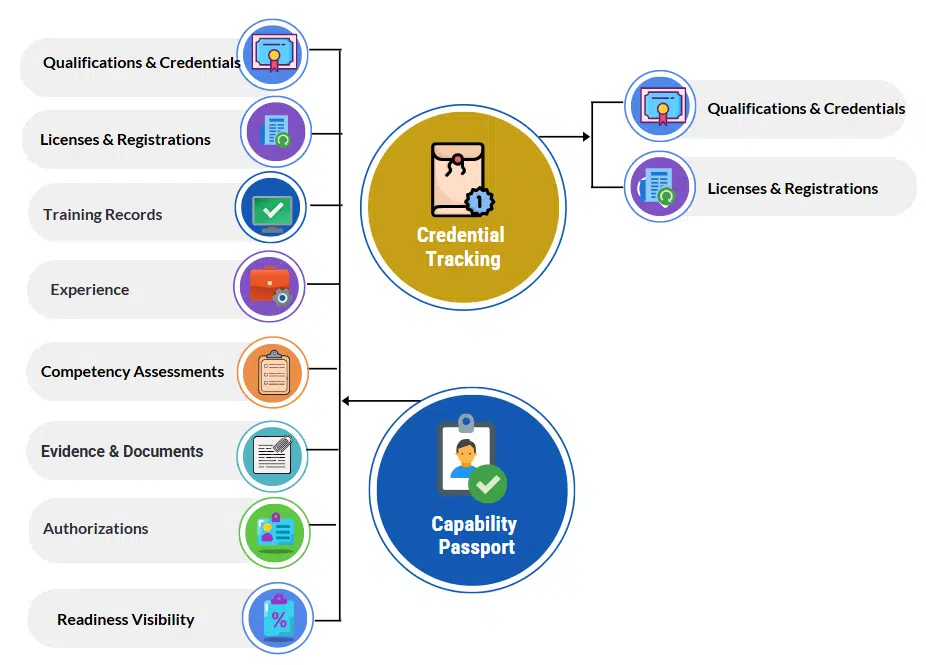
A Capability Passport provides a broader and more comprehensive view of workforce capability by consolidating credentials together with competency, assessment, experience, authorisations and other workforce capability information.
Credential tracking is an important component of workforce capability management. A Capability Passport builds on that foundation by providing a wider view of workforce capability and workforce readiness.
Part of the Workforce Capability Knowledge Index: Explore related workforce capability, competency and readiness concepts.
Why the difference matters
Many organisations maintain credential registers, licence tracking systems or certification records to meet compliance and regulatory requirements.
However, workforce capability decisions often require visibility of more than credentials alone.
Organisations may need to answer questions such as:
- Does the individual hold the required credentials?
- Have required competencies been demonstrated?
- Are authorisations current?
- What capability requirements have been met?
- What workforce risks exist?
- Is the individual ready to perform the required role?
- Are continuing professional development (CPD) requirements met?
Understanding the difference between credential tracking and capability passports helps organisations determine how workforce information should be managed and used.
What Is Credential Tracking?
Credential Tracking focuses on managing workforce credentials and ensuring they remain current.
Tracked credentials may include:
- qualifications,
- certifications,
- licences,
- registrations,
- permits,
- and other formally recognised credentials.
Credential tracking is commonly used to:
- monitor expiry dates,
- identify renewal requirements,
- support compliance reporting,
- verify workforce qualifications,
- and manage regulatory obligations.
Example
| Employee | Nursing Registration | BLS Certification | IV Certification |
|---|---|---|---|
| Employee A | Current | Current | Current |
| Employee B | Current | Expired | Current |
| Employee C | Current | Current | Expired |
This provides visibility of credential status and renewal requirements.
What Is a Capability Passport?
A Capability Passport provides a consolidated view of workforce capability information associated with an individual. A Capability Passport may include:
- qualifications,
- certifications,
- licences and registrations,
- training records,
- experience,
- competency assessment outcomes,
- authorisations,
- capability requirements status,
- supporting evidence,
- and workforce readiness information.
Capability Passports provide a broader view of workforce capability than credential tracking alone.
Example – A Capability Passport may show:
- Current qualifications and certifications
- Licenses and registrations
- Training completed
- Continuing education records
- Competency assessment outcomes
- Scope of practice or authorisations
- Experience records
- Capability requirement status
- Development activities
- Workforce readiness indicators
This provides a more complete picture of workforce capability and readiness.
Key Differences
Credential Tracking
- Focuses on credentials
- Tracks qualifications, licences and certifications
- Primarily supports compliance and credential management
- Answers “Is this credential current?”
- Usually limited to credential records
- Focuses on credential validity
Capability Passport
- Focuses on workforce capability
- Consolidates multiple sources of workforce capability information
- Supports workforce capability visibility and readiness
- Answers “What capability does this person currently have?”
- May include assessments, authorisations, experience, continuing professional development, and requirements status
- Provides broader workforce capability visibility
Can Credential Tracking Replace a Capability Passport?
For some organisations, credential tracking may provide sufficient visibility of workforce qualifications and compliance requirements.
However, organisations seeking visibility of workforce capability, competency and readiness often require a broader view that extends beyond credential status.
Capability Passports help bring together multiple sources of workforce information to support workforce decisions, workforce assurance and workforce readiness.
How Credential Tracking and Capability Passports Work Together
Credential tracking and capability passports are not competing approaches.
Credentials are often an important component of workforce capability and commonly form part of a Capability Passport.
Credential tracking helps organisations manage qualification and certification status, while Capability Passports provide a broader view of workforce capability information.
Many organisations use credential tracking processes within a wider workforce capability management approach.
Relationship to Capability Requirements
Capability requirements define the credentials, competencies, authorisations, training, continuing professional development (CPD), experience and other requirements needed for a role, responsibility or activity.
Credential tracking helps monitor whether specific credential requirements are current. A Capability Passport provides broader visibility of an individual’s status against capability requirements, including credentials, CPD, assessment outcomes, authorisations and other workforce capability information.
Relationship to Competency Assessment
Credential tracking focuses on qualifications and certifications.
Capability Passports may also incorporate competency assessment outcomes and provide visibility of demonstrated competency status.
Relationship to Workforce Readiness
Credentials may contribute to workforce readiness requirements.
However, readiness decisions often require additional information such as competency assessments, authorisations, experience continuing education, and capability requirements status.
Capability Passports help bring this information together into a single workforce capability view.
Relationship to Workforce Capability Infrastructure
Credential tracking and Capability Passports can both form part of workforce capability infrastructure.
Capability Passports often act as a central point for consolidating workforce capability information from multiple sources.
What Credential Tracking and Capability Passports Are Not
Credential Tracking Is Not Workforce Readiness
Current credentials do not necessarily indicate that an individual is ready to perform a role or responsibility.
A Capability Passport Is Not Just a Credential Register
Capability Passports incorporate broader workforce capability information than qualifications, licences and certifications alone.
Neither Replaces Competency Assessment
Credentials and capability records may contribute to workforce decisions, but competency assessment remains an important process for determining demonstrated competency.
Related Concepts
FAQs
What is the difference between Credential Tracking and a Capability Passport?
Credential Tracking focuses on qualifications, licences, certifications and other credentials. A Capability Passport provides a broader view of workforce capability by combining credentials with competency, assessment, experience, continuing education, and readiness-related information.
Can a Capability Passport include credentials?
Yes. Qualifications, certifications, licences and registrations are commonly included within a Capability Passport alongside other workforce capability information.
Which is better, Credential Tracking or a Capability Passport?
Neither is inherently better. Credential tracking and Capability Passports serve different purposes and are often used together as part of workforce capability management.
Does credential tracking demonstrate workforce readiness?
Not necessarily. Credentials may contribute to readiness requirements, but readiness decisions often require additional information such as competency assessment outcomes, authorisations and capability requirements status.
How does a Capability Passport support workforce readiness?
Capability Passports provide a consolidated view of workforce capability information, helping organisations understand whether workforce requirements have been met and readiness can be demonstrated.