
Workforce Readiness Visibility
Why organizations need more than spreadsheets and training records
Many organizations collect large amounts of workforce information, yet still struggle to answer a simple operational question:
Who is currently ready to perform the work required?
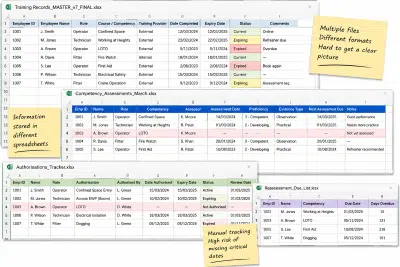
Training records, spreadsheets, certifications, assessment files, authorization records, and workforce reports often exist across multiple disconnected systems and processes. As operational complexity increases, this fragmented visibility can make it difficult to identify workforce capability gaps, readiness risks, and operational exposure.
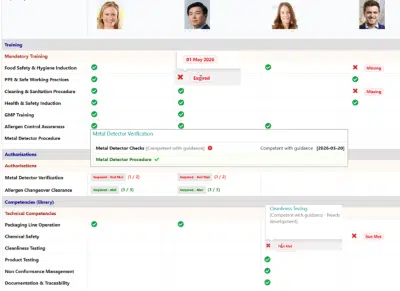
Workforce readiness visibility is becoming increasingly important as organizations seek better ways to understand workforce capability, operational readiness, authorization status, reassessment requirements, and workforce risk across teams, locations, and operational areas.
Workforce Data Does Not Always Mean Workforce Visibility
Many organizations already hold significant workforce information, including:
- training records
- competency assessments
- qualifications and certifications
- authorization approvals
- reassessment dates
- operational experience records
- CPD activities
However, this information is often
- spread across multiple systems
- maintained manually
- inconsistent between departments
- difficult to consolidate
- outdated or incomplete
- disconnected from operational requirements
As a result, organizations may struggle to obtain a reliable operational view of workforce readiness.
Common Workforce Visibility Challenges
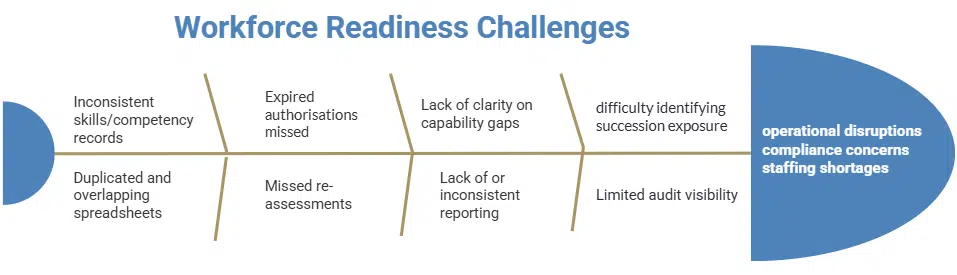
Organizations commonly experience challenges such as:
- unclear workforce capability gaps
- inconsistent competency records
- expiring authorizations going unnoticed
- reassessment backlogs
- duplicated spreadsheets
- limited audit visibility
- difficulty identifying succession exposure
- reliance on tribal knowledge
- inconsistent reporting across teams or locations
In some cases, workforce issues may only become visible after operational disruption, compliance concerns, or staffing shortages occur.
Why Workforce Readiness Visibility Matters
Improved workforce readiness visibility helps organizations:
- identify workforce gaps earlier and make better staffing decisions
- support safer operations
- improve workforce planning
- reduce compliance risk
- maintain authorization oversight
- support reassessment processes
- improve succession visibility
- enable better adaptability to operational change
Visibility also becomes increasingly important where organizations are managing:
- distributed workforces
- regulated environments
- technical capability requirements
- operational risk
- skills and workforce shortages
- changing role requirements
- AI-enabled workflows
As workforce complexity continues to increase, organizations require more than isolated workforce records — they increasingly require connected operational visibility into workforce readiness and workforce capability risk.
Building Better Workforce Readiness Visibility
Improving workforce readiness visibility requires more than additional reporting. Organizations also need greater consistency in how workforce requirements, competency assessments, authorizations, reassessment processes, and evidence are defined and maintained.
As workforce complexity increases, organizations may find it difficult to maintain reliable readiness visibility when information is spread across disconnected spreadsheets, systems, or inconsistent local processes.
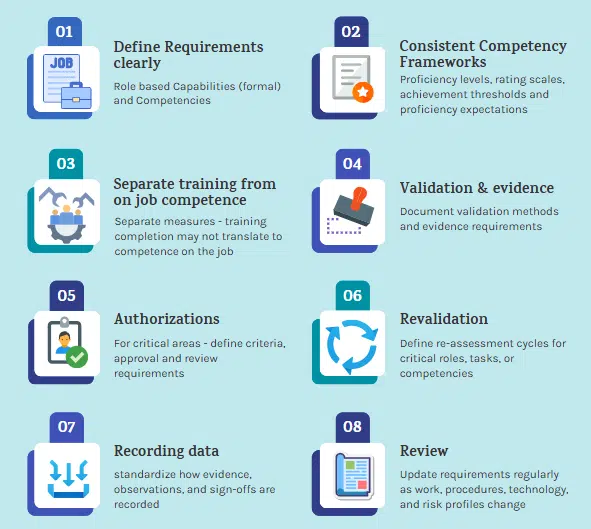
Key steps are:
- defining role-based capability and competency requirements clearly
- using consistent competency frameworks, rating scales, and proficiency levels
- separating training completion from demonstrated competence
- documenting validation methods and evidence requirements
- defining authorization rules, approval conditions, and expiry periods
- applying reassessment cycles for critical roles, tasks, or competencies
- standardizing how evidence, observations, and sign-offs are recorded
- reviewing requirements regularly as work, technology, and risk profiles change
This creates a more reliable foundation for workforce readiness reporting.
Workforce Readiness Visibility Requires More Than Workforce Data
As organizations face increasing operational complexity, workforce readiness visibility is becoming an increasingly important operational capability rather than simply a reporting exercise.
Organizations increasingly require better ways to:
- connect workforce requirements and competency evidence
- maintain authorization and reassessment visibility
- identify workforce capability gaps earlier
- improve operational readiness oversight
- support workforce adaptability and workforce planning
Structured workforce readiness frameworks help organizations move beyond disconnected spreadsheets and isolated records toward more consistent, visible, and operationally aligned workforce capability management.
Related Information
Explore –
Workforce Readiness Resource Hub
What Is Workforce Readiness?
Workforce Readiness vs Training Completion
Capability & Competency Management Resources
AI and Work
Or explore how Centranum supports workforce readiness through integrated capability management, competency assessment, authorization tracking, workforce visibility, and operational reporting.
FAQs
What is workforce readiness visibility?
Workforce readiness visibility refers to an organization’s ability to see workforce capability status, competency gaps, authorization status, reassessment requirements, and operational readiness risks across teams, roles, or locations.
Why do organizations struggle with workforce readiness visibility?
Workforce information is often spread across spreadsheets, learning systems, assessment records, emails, paper files, and separate operational systems. This can make it difficult to maintain accurate and connected readiness visibility.
What are common signs of poor workforce readiness visibility?
Common indicators may include unclear authorization status, inconsistent competency records, reassessment backlogs, hard to maintain spreadsheets, limited workforce reporting, hidden capability gaps, reliance on tribal (undocumented) knowledge
How can organizations improve workforce readiness visibility?
Organizations can improve visibility by defining role requirements clearly, standardizing competency assessment processes, structuring authorization management, maintaining reassessment cycles, centralizing workforce reporting, improving consistency of workforce data and evidence
Why are spreadsheets not ideal for workforce readiness management?
Spreadsheets become difficult to maintain as workforce complexity increases. Organizations may struggle with manual updates, version control, reporting consistency, reassessment tracking, authorization visibility, and maintaining a reliable operational view across teams or locations.