
What is Workforce Readiness?
Understanding what workforce readiness means — and why it matters more than ever.
Organizations today face increasing pressure to ensure that employees are not only trained, but genuinely prepared to perform the work required of them.
In many environments, workforce readiness has become a critical operational issue linked to safety, compliance, productivity, resilience, and organizational performance. Yet despite its importance, many organizations still struggle to clearly define what workforce readiness actually means — or how to measure it consistently.
As work changes through automation, AI, workforce mobility, and evolving operational demands, readiness can no longer be viewed as simply having enough people or completing mandatory training.
Workforce readiness is about ensuring that people are capable, competent, authorized, and prepared to perform their work effectively in real operational conditions.

Workforce Readiness in practice
Workforce readiness refers to the ability of an organization to ensure that employees have the required capability, competence, experience, and support to safely and effectively perform their roles. It is broader than:
- training completion
- qualifications or certifications
- staffing levels
- job descriptions
- performance ratings
A workforce may appear compliant on paper, but still lack operational readiness if:
- competencies have not been validated
- critical experience is missing
- reassessments are overdue
- authorizations have expired
- workforce capability gaps are not visible
- succession risks are unmanaged
- employees are unable to adapt to changing work requirements
Workforce readiness combines multiple elements into a connected operational view of workforce capability.
Operational Performance

Organizations rely on employees being able to perform work consistently, safely, and effectively under real operational conditions.
When workforce readiness is weak, organizations may experience:
- increased errors
- reduced productivity
- operational disruption
- inconsistent work quality
- higher supervision requirements
- slower adaptation to change
Weak workforce readiness affects not only day-to-day operational performance, but also an organization’s ability to scale, adapt, maintain quality standards, and respond effectively to changing business and operational demands.
Safety and Risk Reduction

In high-risk industries, workforce readiness directly affects operational safety and organizational risk.
Organizations need confidence that employees are:
- competent
- appropriately assessed
- currently authorized
- adequately supervised
- operating within their scope of capability
Insufficient readiness visibility can increase exposure to safety incidents, compliance failures, and operational risk.
Compliance and Audit Readiness

Many industries require organizations to demonstrate workforce capability through structured evidence and documented processes like;
- certifications
- supervised sign-offs
- authorization management
- reassessment cycles
- evidence records
- audit trails
Workforce readiness frameworks help organizations maintain visibility and accountability across these requirements.
Organizational Agility

Work is changing rapidly through:
- AI and automation
- evolving technologies
- workforce shortages
- changing regulatory requirements
- shifting operational demands
Organizations increasingly need visibility into:
- transferable capabilities
- workforce adaptability
- emerging capability gaps
- readiness for new tasks and technologies
Workforce readiness supports more informed workforce planning and operational decision-making.
Who Is Responsible for Workforce Readiness?
Workforce readiness is not owned by a single department. In many organizations, responsibility is shared across:
- operational leaders
- frontline managers
- workforce capability teams
- learning and development
- compliance and risk functions
- HR teams
- technical leaders and subject matter experts
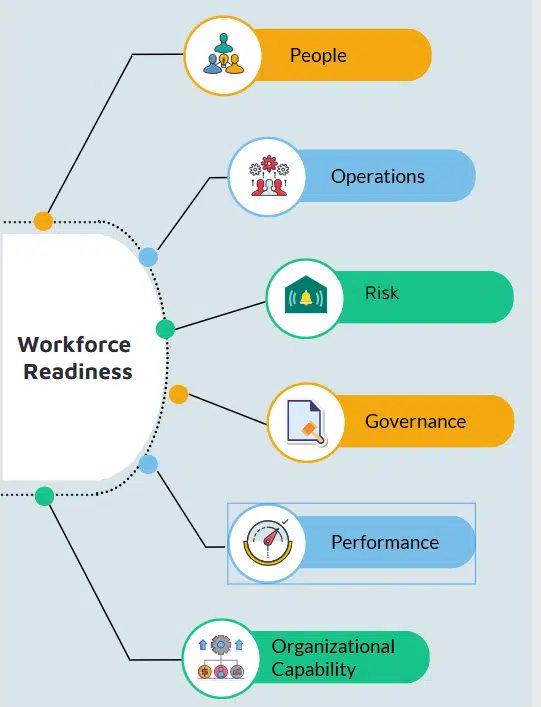
This is because workforce readiness sits at the intersection of:
- people
- operations
- risk
- governance
- performance
- organizational capability
Organizations with mature readiness practices typically treat workforce readiness as an operational responsibility rather than simply a training activity.
Which Industries Depend Most on Workforce Readiness?
Workforce readiness is important in almost every industry, but it becomes especially critical where work is:
- safety-sensitive
- technically complex
- operationally regulated
- difficult to supervise directly
- dependent on specialized expertise
Industries commonly focused on workforce readiness include:

Healthcare and Clinical Services

Manufacturing and Engineering, Mining & Heavy Industry

Utilities and energy

Technology & Infrastructure

Logistics, Transport, Field Services

Government and Public Sector
In these environments, organizations often require structured approaches to competency validation, authorizations, reassessment, and operational capability visibility.
How Is Workforce Readiness Measured?
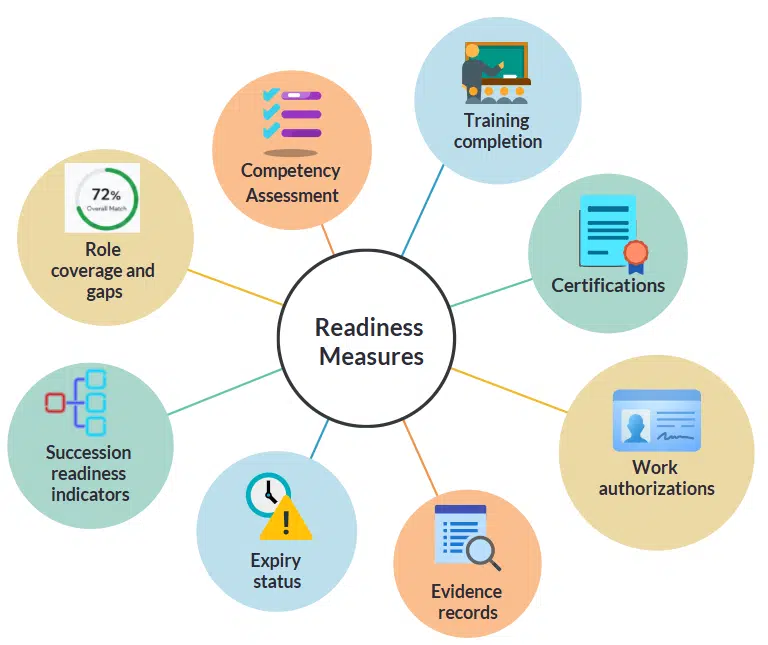
Organizations use many different indicators to measure workforce readiness. These may include:
- competency assessment outcomes – proficiency levels
- training completion
- certifications and qualifications
- practical observations
- evidence records
- reassessment status
- authorization status
- operational experience
- role coverage and capability gaps
- succession readiness indicators
The challenge for many organizations is not the lack of workforce data, but the inability to connect that information into a meaningful operational view.
Workforce readiness requires integrated visibility across:
- role requirements
- capability expectations
- competency evidence
- workforce gaps
- development activities
- operational risk indicators
Where Should Workforce Readiness Be Visible?
Workforce readiness should not be hidden within disconnected spreadsheets, isolated training systems, or manual records. Leaders need operational visibility into:
- workforce capability gaps
- expiring authorizations
- reassessment requirements
- critical role coverage
- succession exposure
- readiness trends
- workforce risk indicators
Modern workforce readiness approaches increasingly use:
- dashboards
- readiness heatmaps
- competency analytics
- operational reporting
- workforce risk visibility tools
to support faster and more informed decision-making.

Workforce Readiness Is Becoming a Strategic Capability
As organizations face increasing operational complexity, workforce readiness is evolving from a training and compliance concern into a broader operational capability. Organizations need better ways to:
- define capability requirements
- validate competence
- maintain workforce visibility
- support workforce adaptability
- manage operational risk
- prepare for changing work demands
Workforce readiness frameworks help organizations connect these elements into a more structured and sustainable approach to workforce capability management.
FAQs
What is the difference between workforce readiness and workforce planning?
Workforce planning focuses on forecasting workforce supply and demand. Workforce readiness focuses on whether employees are currently capable, competent, authorized, and prepared to perform required work effectively.
Can employees be trained but not workforce ready?
Yes. Employees may complete training requirements but still lack practical competence, operational experience, confidence, supervision sign-off, or current authorization to perform work independently.
What is the difference between certification and workforce readiness?
Certifications confirm that specific training or assessment requirements have been completed. Workforce readiness is broader and may also include practical capability, experience, reassessment status, operational performance, and current authorization.
Why are organizations focusing more on workforce readiness?
Organizations are facing increasing operational complexity, workforce shortages, technology change, and compliance expectations. Workforce readiness helps improve visibility into workforce capability and operational risk.
How does workforce readiness support succession planning?
Workforce readiness visibility helps organizations identify capability gaps, readiness risks, and future role coverage challenges before critical expertise is lost.
How does AI affect workforce readiness?
AI and automation are changing tasks, workflows, and decision-making responsibilities. Organizations increasingly need visibility into workforce adaptability, transferable capabilities, and readiness for changing work requirements.