

Operational Skills Management Software
Track skills, competency, training, and authorizations in one system — with real-time visibility of who is ready to perform specific tasks across teams, units, and shifts.
The Challenge of Managing Operational Skills and Competency
Many organisations manage operational skills, training, and competency across multiple systems — or rely on static spreadsheets and skills matrices.
- Training records sit in one system, task-based know-how in another
- Skills matrices become outdated and difficult to maintain
- Supervisors rely on incomplete or inconsistent information
- Onboarding takes longer than expected
- Certification and revalidation dates are missed
As a result, organisations struggle to answer a critical operational question:
Who is currently ready and authorized to perform each task or role?

What you can achieve
- Real-time visibility of who is ready and authorized to perform specific tasks
- Faster onboarding and more consistent task sign-off
- Reduced operational and compliance risk
- Clearer identification of skills gaps and expiring requirements
- Less manual effort maintaining skills matrices and training records
- Better staffing and deployment decisions across teams, units, and shifts
Aligned Benefits Across Operational Teams
For Supervisors and Frontline Managers
- See who is ready and authorized to perform each task or role
- Staff shifts, lines, and assignments with confidence
- Identify gaps, expiries, and risks in real time
- Validate on-the-job performance with structured task sign-off (OJT)
- Reduce reliance on spreadsheets and informal knowledge
For Operations and Training Leaders
- Standardize how skills, tasks, and competency are defined and assessed
- Link training directly to task requirements and on-the-job validation
- Track skills, competency, and authorization status across teams, sites, and units
- Move from static skills matrices to structured, scalable frameworks
- Ensure revalidation and certification requirements are consistently managed
For Compliance, Quality, and Safety Leaders
- Maintain a single, reliable record of skills, competency, and authorizations
- Track certifications, expiries, and evidence in one place
- Generate audit-ready reports with full history and traceability
- Demonstrate who is authorized to perform regulated or high-risk tasks
- Reduce operational and compliance risk through verified capability data
From Skills Matrix to Operational Competency Assurance
Many organisations begin with an Excel skills matrix or skills inventory to track experience, training, and qualifications.
While these tools provide basic visibility, they have limitations in operational environments:
- Skills are often self-declared or inconsistently defined
- Updates are manual and quickly become outdated
- Evidence of competence is not captured
- There is no clear view of current readiness across teams or shifts
Operational skills management replaces static tracking with a structured, real-time system:
| Excel Skills Matrix | Operational Skills Management Software |
|---|---|
| Static grid | Live, real-time system |
| Self-declared skills | Verified task validation |
| Manual updates | Automated expiry tracking |
| No structured evidence | Audit-ready validation records |
| No shift coverage view | Readiness by unit, team, and shift |
A simple skill inventory records what someone says they can do. Operational skills management verifies what they are authorized to perform today.
How Operational Skills Management Works
Operational skills management connects role requirements, training, and on-the-job validation into a single, structured workflow — ensuring that competence is verified and authorization is always current.
1. Define Role and Task Requirements
Each role is defined in terms of:
- Purpose
- Key responsibilities and deliverables
- Task requirements (what must be performed on the job)
These role definitions form the foundation for all capability, competency, and training requirements.
2. Define Capability and Competency Standards
Capability and competency requirements are defined in central libraries, including:
- competencies with structured indicators and rating models
- skills and task-based standards
- required qualifications, certifications, and training
These libraries provide a consistent, reusable structure across the organisation.
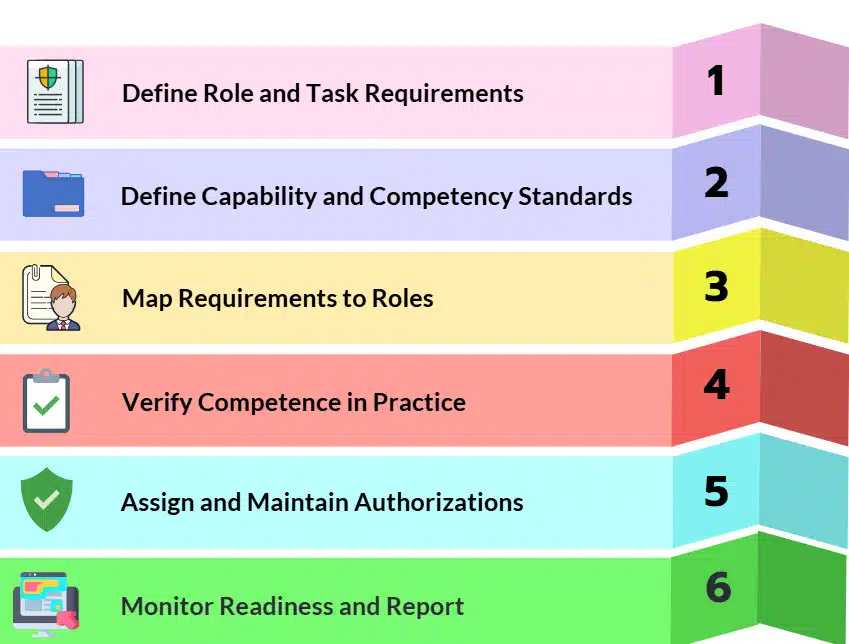
3. Map Requirements to Roles
Capability and competency requirements are then mapped to roles, specifying:
- expected knowledge
- required training and certifications
- required skills and proficiency levels
This ensures that each role has clearly defined, measurable requirements that can be applied consistently across teams, units, stations, or shifts.
4. Verify Competence in Practice
Competence is confirmed through a combination of:
- Training completion –Required training and certifications are tracked and kept current
- Knowledge verification – Understanding of procedures, safety requirements, and SOPs/WIs is assessed as required
- On-job task validation (OJT) – Supervisors validate real task performance using structured checklists and sign-off, with supporting evidence captured
5. Assign and Maintain Authorizations
Authorisation is based on verified capability:
- authorization component status updates automatically based on training, assessment, and expiry rules
- revalidation requirements are tracked and triggered as needed
- individuals are authorized only when all requirements are met and validated
6. Monitor Readiness and Report
Real-time reporting provides visibility of:
- who is authorised to perform each task or role
- gaps in skills, competency, or certification
- expiring or overdue requirements
- readiness across teams, units, stations, and shifts
Capability passports and operational reports provide a complete, audit-ready view of workforce readiness.
Industries Where Operational Competence Must Be Proven
Skills matrix and compliance tracking are critical in environments such as manufacturing, utilities, field service, and energy or mining.
A skills matrix provides visibility — task sign-off and authorisation provide proof.
Centranum extends the skills matrix with knowledge testing, on-the-job validation, and real-time authorization tracking — enabling supervisors to confirm who is competent and authorized to perform each task across machines, shifts, and sites.
Manufacturing: From Skills Matrix to Task Sign-Off
Ensure operators are trained and audit-ready across shifts and machines.
- Focused onboarding for new staff
- Cross-train staff to cover machines and shifts
- Record OJT sign-offs directly into the skills matrix
- Audit operator skills for safety compliance
- Reduce downtime with real-time skills visibility


Utilities Compliance & Skills Tracking
Skills certification tracking. Ensure engineers, field technicians and plant crews always meet training, certification and safety requirements.
- Track qualifications, licenses, permits and renewals
- Automate reminders for expiring certifications
- Log OJT completions in the field with supervisor validation
- Generate skills audits for compliance reviews
- Demonstrate compliance with audit-ready reports
Mobile Workforce Competence & OJT Tracking
Equip your crews with the right skills for the job and prove compliance on site.
- Map skills to job roles and projects
- Map OJT training to job roles and projects
- Validate trade skills, permits, certifications, and safety training
- Ensure safe deployment with competence checks
- Produce skills audit reports for regulators and clients


High-Risk Operations: Competency & Compliance
Manage competence and performance across hazardous environments in mines, refineries, and processing plants where safety is critical.
- Capture OJT evidence for critical operator tasks
- Assess critical operator and safety skills
- Identify vulnerabilities before incidents occur
- Strengthen compliance with evidence-based audits
Logistics Skills Matrix & Compliance
Skills certification tracking. Keep warehouse and logistics teams certified, safe, and audit-ready.
- Track forklift and vehicle certifications
- Capture OJT training logs
- Monitor warehouse safety training
- Run periodic skills audits for warehouse staff
- Ensure shift readiness with validated skills data

Trusted in high-compliance environments where proof of competence matters
Organizations in manufacturing, healthcare, energy, and government use Centranum to manage workforce competence.


SOC 2 Type ll Certified • Enterprise-Grade Security • Audit-Ready
Operational Skills Tracking Components
These modules work together to manage training, knowledge verification, and on-job task validation, providing a complete system for operational competence — not just a skills matrix.
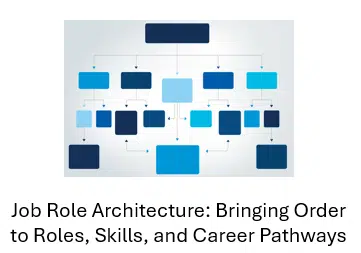
Role & Task Definition
Define what each role must be able to do and the Capabilities needed to deliver
Define job roles, critical tasks, and required skills in one place — including qualifications, mandatory training, certifications, experience, and task-level competence requirements.
Role and task definitions form the foundation for training assignment, knowledge testing, on-job validation, and reporting — ensuring competence expectations are clear and consistent across sites and shifts.
A central skills and task library underpins role definition, allowing organizations to maintain consistent, version-controlled definitions of capability requirements, skills, tasks, certifications, and competence standards across sites and operations.
Where relevant, career pathways can be defined, and validated competence records can support internal progression and workforce planning — without diluting the focus on operational readiness. Staff can see potential for development.
Training & Onboarding Management
Ensure training supports operational readiness
Assign and track mandatory and role-based training, certifications, and re-certification requirements.
Centranum supports structured onboarding by linking training activities directly to role and task requirements, providing clear visibility of readiness for new and transitioning staff.
Automated reminders ensure training and certifications remain current.
Target development where it matters
Learning resources and development activities are linked directly to identified competence gaps — supporting continuous improvement without disconnecting learning from operational needs.
Knowledge Testing (SOP/WI-Linked)
Verify understanding before task authorisation
Confirm that staff understand procedures, safety requirements, and work instructions using short knowledge checks linked directly to SOPs and WIs.
Knowledge test results automatically contribute to competence status, ensuring training completion alone does not imply readiness.
Real time individual and consolidated reports on knowledge gaps at a detailed level enable targeted learning initiatives.


On-Job Task Validation & Sign-Off
Stand-alone Skills Assessment platform. All the flexibility you need
Supervisors validate task competence using checklists and observations, with sign-off and evidence stored against the role.
Multiple assessment methods supported. Administrative work is minimised.
Built in safeguards to minimise bias.
Competence & Authorisation Reporting
See who is competent today
Real time rich information and reporting. Instantly show who is competent, authorized, or overdue for revalidation.
Real-time reports show competence and authorization status by role, task, team, department, and location.
Quickly identify gaps, expired authorizations, or pending validations, and generate audit-ready reports for internal review, customers, or regulators.
Reports drill down to the level of particular standards or behaviors to enable a laser targeted approach to training.

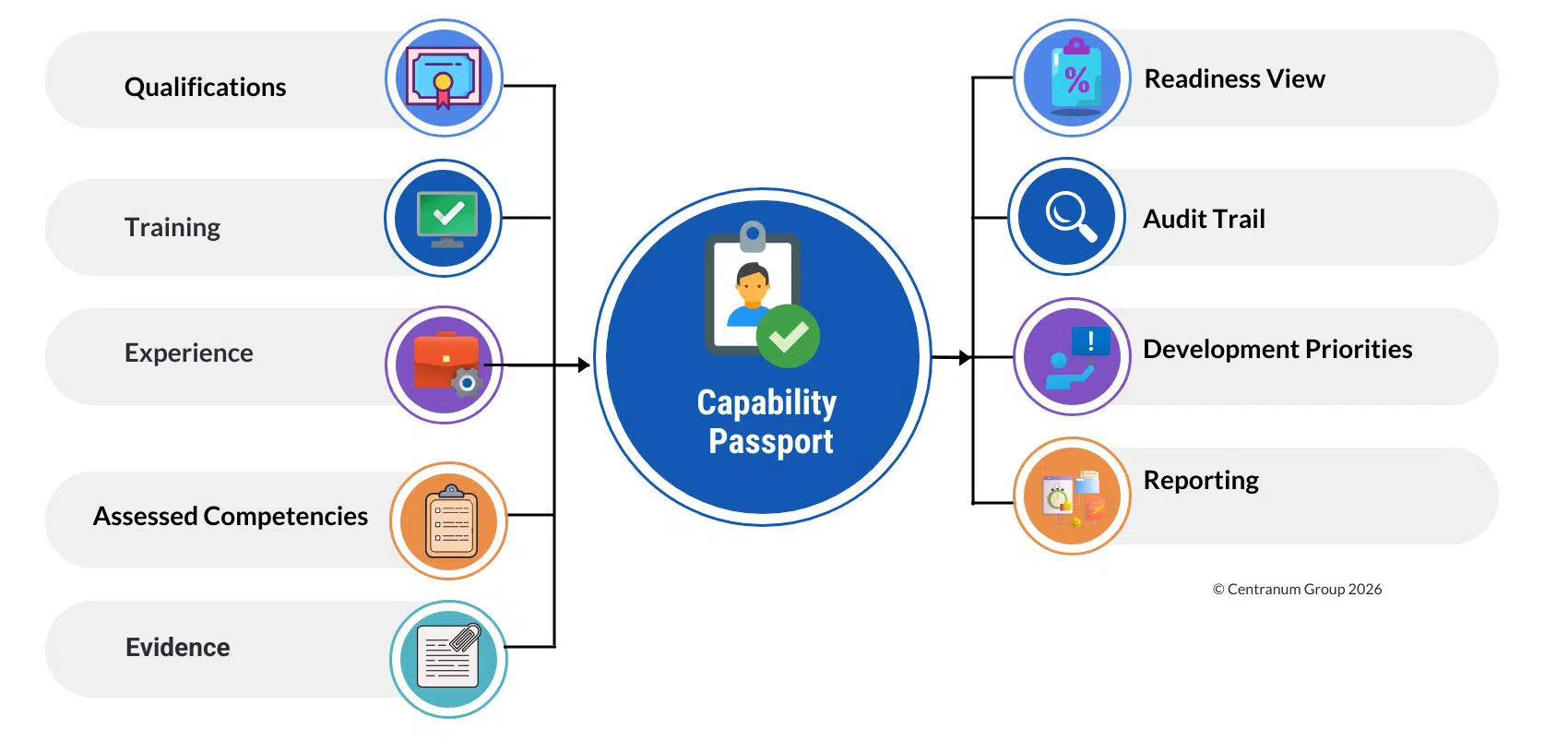
Capability Passport
A complete, individual record of operational competence
Each person has a Capability Passport that consolidates:
- Role and task requirements
- Training completed and expiry status
- Knowledge test results
- Validated tasks and authorizations
The Capability Passport provides a single, trusted source of truth for supervisors, managers, and auditors.
Why Centranum for Operational Skills Management?
- 20+ years supporting compliance-driven industries.
- A unified platform for workforce capability and skills management
- Built on Built on Centranum’s Competency Management Software our operational skills management tools ensure compliance and audit readiness.”
- A single source of truth for operational competence.
- Scalable from frontline teams to enterprise.
From Compliance to Growth
Operational skills tracking isn’t just about meeting compliance — it’s about reducing risk and building a workforce ready for future challenges. Centranum helps organizations move beyond spreadsheets and silos, turning operational assurance into a platform for workforce growth.
Complete toolkit for your own fully customizable operational skills management system
Related Reading
For more on implementing compliance and assurance frameworks, explore these guides.
FAQs
How do you define competence in manufacturing?
In manufacturing and other high-risk operational environments, competence is confirmed only when three elements are verified: training completion, knowledge understanding, and on-job task performance.
Centranum brings these together by linking training records, SOP/WI-based knowledge testing, and supervisor-validated task sign-off to each role and individual. This creates auditable proof that staff are authorized and competent to perform specific tasks — not just that training has been completed.
Can supervisors validate tasks on the job (OJT)
Yes. Supervisors can validate competence directly on the job using task checklists, observations, and sign-off (OJT or competency validation).
Evidence of task validation is captured against the individual and role, including who validated the task and when. This ensures competence is based on demonstrated performance in the work environment — not just course attendance or self-assessment.
How is evidence captured for audits or customer reviews?
All competence evidence — including training completion, knowledge test results, task validation, and certifications — is stored against the individual and role with time-stamped records.
Centranum provides audit-ready reports showing who is authorized to perform which tasks, by team, department, or location, with exports available for internal audits, customer assurance, or regulator review.
What is operational skills management software?
Software that centralizes skills matrices, OJT tracking, certifications, and assessments so you can monitor competence, run skills gap analysis, and produce audit-ready compliance reports.
How does this differ from a simple skills matrix in Excel?
Spreadsheets quickly become outdated and hard to audit. Centranum provides a live, centralized database with assessments, linked training, and audit trails — essential for high-compliance industries.
Can the system support compliance audits?
Yes. It provides full reporting, version control, and audit-ready records, reducing the time and stress of proving compliance to regulators.
How does skills tracking reduce operational risk?
By identifying gaps before they cause incidents. Skills assessments, knowledge testing, and linked learning ensure workers are competent for the tasks they perform.
Can we tailor skills libraries to our industry?
Absolutely. Organizations can import their own skills, certifications, and compliance standards, or use Centranum’s library as a starting point.
How does the system work for mobile or remote teams?
The platform supports mobile access, allowing managers to assess, track, and verify competence in the field — ideal for utilities, logistics, and other distributed workforces.
How will operational supervisors and managers benefit from the system?
Supervisors gain instant visibility of team competence through live dashboards. They can see who is qualified, who needs reassessment, and where skills gaps pose operational risks. Instead of chasing spreadsheets, managers have decision-grade data to assign work safely, plan training, and demonstrate compliance at any moment.