
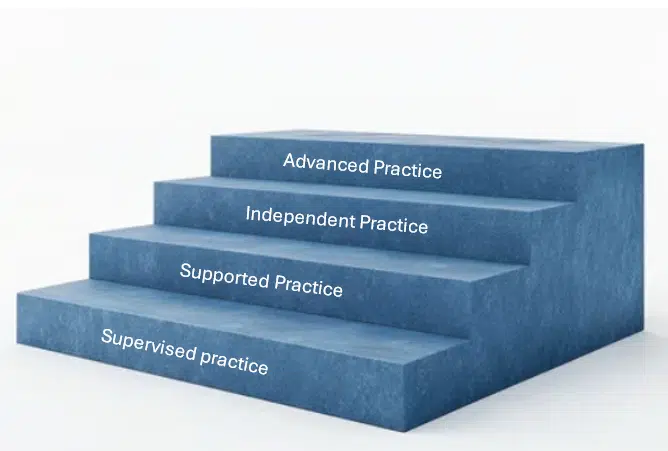
What is TSAM (Tiered Skills Acquisition Model)?
TSAM (Tiered Skills Acquisition Model) is a structured, workplace-based approach to orientation and competency development in which individuals progress through defined tiers of skills and responsibilities, moving from supervised practice to independent and advanced performance based on demonstrated competence rather than time served.
TSAM is most widely associated with nursing orientation and transition-to-practice programmes, but the underlying model—tiered progression with evidence-based sign-off—is applicable to many regulated and high-risk work environments.
Why TSAM Was Developed
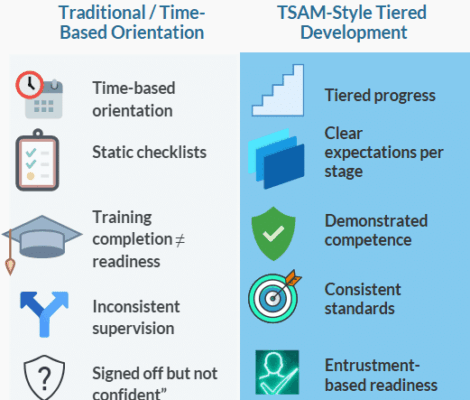
Traditional orientation models often rely on:
- time-based completion
- static skills checklists
- training attendance rather than demonstrated competence
TSAM was developed to address these gaps by:
- structuring progression from simple to complex practice
- clarifying expectations at each stage of orientation
- requiring observed performance and preceptor validation
- reducing variability in readiness for independent practice
Research in nursing professional development describes TSAM as a way to transform orientation from task completion to demonstrated capability (Joswiak, 2018).
Core Components of a Tiered Skills Acquisition Model
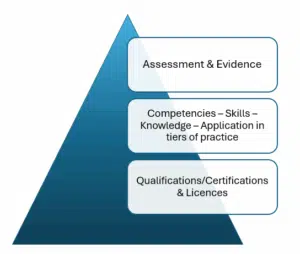
While implementations vary, TSAM-style models typically include:
- Defined tiers of practice (eg. entry → intermediate → independent → advanced)
- Bundled skills and responsibilities at each tier
- Associated Learning Resources
- Preceptor or assessor oversight
- Observed performance and evidence capture
- Clear criteria for progression between tiers
- Documentation of readiness and sign-off
Progression is based on competence demonstrated in context, not elapsed time.
TSAM, Timeframes, and Competence
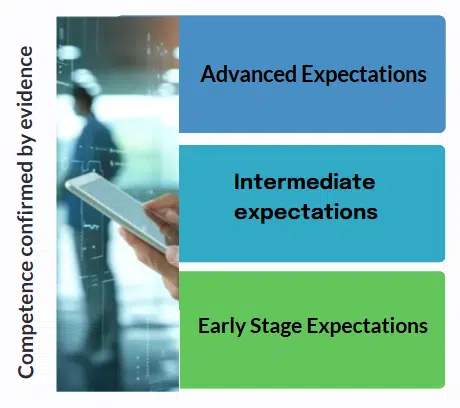
TSAM-style models are competence-based, not time-based — but time is often used as a structuring mechanism. In practice, organisations commonly define:
- early-stage expectations (e.g. first weeks of practice)
- intermediate milestones (e.g. by 8–12 weeks)
- later-stage or advanced expectations
These timeframes:
- guide supervision and learning
- support consistent programme delivery
- help identify individuals who may need additional support
However, time alone is never treated as evidence of competence. Progression occurs only when required performance standards are demonstrated and supported by assessment and evidence.
This approach balances flexibility with safety and accountability.
TSAM®, the Literature, and Terminology
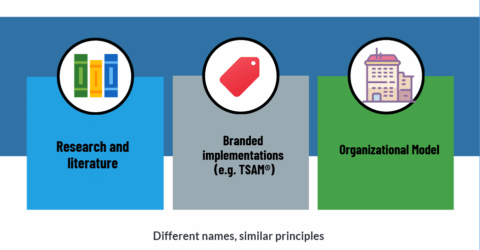
The term Tiered Skills Acquisition Model appears in the nursing literature, including the frequently cited 2018 article:
Transforming Orientation Through a Tiered Skills Acquisition Model, Joswiak, M. E. (2018), Journal for Nurses in Professional Development
TSAM® is a registered trademark of Mayo Clinic and is used to refer to Mayo Clinic’s branded TSAM® model, education programmes, and product packages.
In this guide:
• “TSAM®” refers specifically to the Mayo Clinic implementation.
• “TSAM-style” or “tiered skills acquisition” refers to the broader model described in the literature and applied in practice.
Centranum does not claim endorsement by Mayo Clinic and supports TSAM® where organisations license Mayo materials, as well as TSAM-style models built independently.
TSAM® vs Building Your Own Tiered Model
Organisations typically take one of three approaches:
Option 1 — Adopt TSAM® (Mayo Clinic)
- Uses Mayo-defined tiers, materials, and education packages
- Requires licensing and approved delivery platforms
- Well suited to nursing transition-to-practice programmes
Option 2 — Build Your Own Tiered Skills Model
- Uses the same tiered progression concept
- Tiers, skills, and assessment rules defined internally
- Often used for allied health, technical, operational, or specialist roles
Option 3 — Hybrid (Common in Practice)
- TSAM® used for nursing orientation
- TSAM-style tiered models applied to other roles
- Shared governance, evidence standards, and reporting
Centranum supports all three approaches.
TSAM implementation options (example comparison)
| Licensed model | Organisation-defined model | Hybrid approach | |
|---|---|---|---|
| Structure ownership | Model structure and terminology are defined by the licensor; local configuration may be permitted within defined boundaries. | Structure, tiers, naming conventions, and governance are defined internally. | Core structure may follow a licensed model for some programmes, while other pathways are defined internally. |
| Content flexibility | Content is typically standardised and version-controlled; local additions may be allowed depending on licence terms. | Fully flexible: competencies, tasks, indicators, and tier definitions can be tailored to local context and role scope. | Standardised content where licensed; tailored content for other roles, sites, or pathways. |
| Assessment control | Assessment approach and evidence standards are often guided by the licensed methodology; local assessment design may be constrained. | Assessment methods, scoring/entrustment scales, assessor roles, and evidence rules are set by the organisation. | Licensed assessment rules for the licensed pathway; organisation controls assessment design elsewhere. |
| Evidence requirements | Evidence expectations are usually defined by the model and/or required for defensibility; evidence types may be specified. | Evidence requirements are set based on role risk and governance; evidence types can vary by role/programme. | Evidence requirements follow the licensed approach where used, with organisation-defined evidence standards for other pathways. |
In all approaches, progression should be based on demonstrated competence; timeframes may be used to structure expectations but should not be treated as evidence of competence.
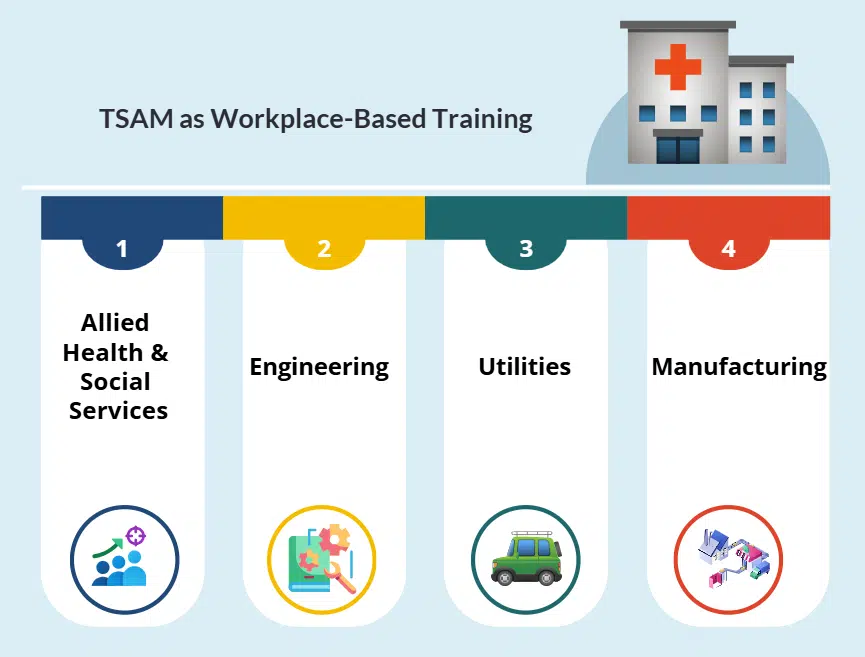
Beyond Nursing — TSAM as Workplace-Based Training
Although TSAM is most visible in nursing, the model translates well to other environments where safe, independent practice must be demonstrated, including:
- Allied health and social services
- Manufacturing and operations
- Utilities and energy
- Engineering maintenance
- Field service and technical roles
In these contexts, TSAM-style models help organisations:
- manage progression from supervised to independent work
- document competence for audit and assurance
- reduce risk during onboarding and role transitions
How TSAM Relates to Skills, Competency, and Competence
A common source of confusion is terminology:
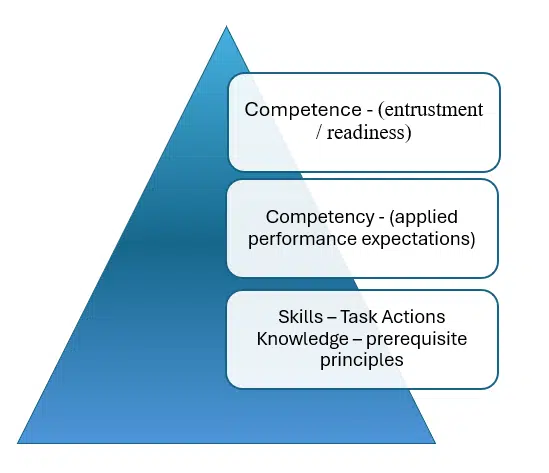
- Skills are task-level abilities (what someone can do)
- Competency defines expectations (skills + knowledge + behaviours in context)
- Competence is demonstrated performance to a required standard
TSAM-style models operationalise this distinction by:
- grouping skills within defined competencies
- requiring observed performance
- confirming competence at each tier before progression
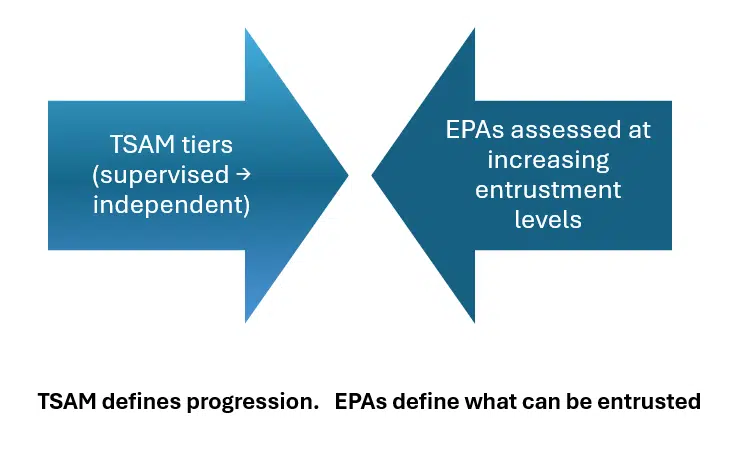
Entrustable Professional Activities (EPAs) and TSAM
In some clinical disciplines, particularly pharmacy and medicine, Entrustable Professional Activities (EPAs) are used to operationalise competence through real, accountable work.
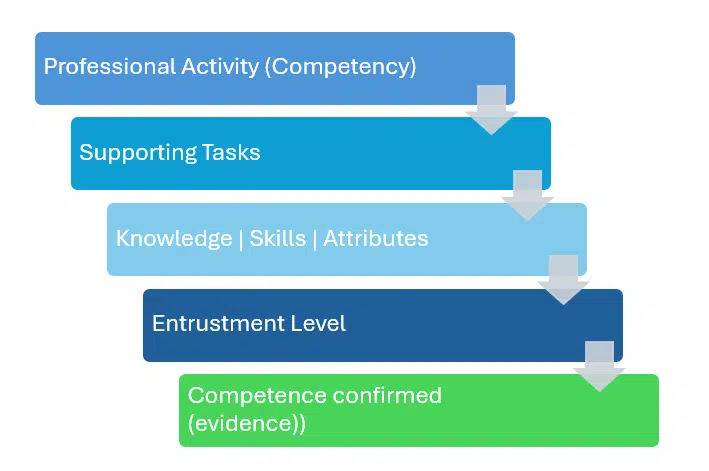
Rather than treating EPAs as a separate layer, many organisations implement Professional Activities as competencies within their framework. In this approach:
- the Professional Activity defines the scope of accountable work
- the competency and description captures the activity in context
- tasks describe observable performance
- knowledge, skills and personal attributes can be structured as sub-components with indicators
- Learning Resources may be linked
- evidence is attached to confirm demonstrated performance
This allows Professional Activities to function as robust, auditable competencies, rather than abstract statements or simple skills checklists.
EPAs, Competency and Proficiency
Professional Activities are assessed using levels of entrustment, which describe the degree of supervision required to perform the activity safely and effectively. Typical entrustment levels include:
- performing with guidance or direction
- performing with intermittent coaching
- performing independently
- performing at an advanced or supervisory level
These levels are used as a proficiency scale, not as a pass/fail score.
Competence is achieved when the required level of independent performance is demonstrated consistently and supported by assessment and evidence.
EPA Structure
How Centranum Supports TSAM and Tiered Orientation
Centranum supports EPA-style models within TSAM frameworks by enabling organisations to:
- define Professional Activities as competencies
- structure tasks, knowledge, skills and attributes as assessable components
- apply entrustment or proficiency levels as ratings
- support self-assessment and assessor review
- attach evidence to confirm demonstrated competence
- maintain a current, auditable record of readiness for independent practice
This allows EPAs to operate as part of a single, integrated competence framework, rather than as a standalone process.
EPAs, TSAM, and the Role of Time
EPAs align closely with TSAM-style tiered development, but it is important to distinguish between timeframes and competence.
TSAM and EPA-based models are competence-based, not time-based.
However, many organisations use time-based expectations to structure learning and supervision, such as:
- competencies expected in the first few weeks
- competencies expected by 8–12 weeks
- advanced expectations after longer exposure
These timeframes guide programme delivery and identify support needs, but time alone is never treated as evidence of competence.
Progression occurs only when required performance standards are demonstrated and verified.
How Centranum Supports EPA-Style Assessment
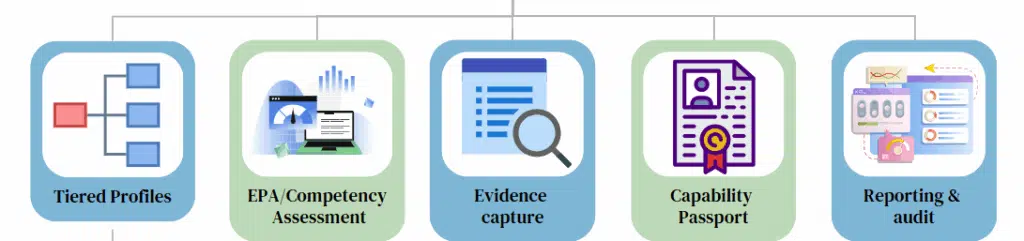
Centranum does not “digitise a checklist.” It supports end-to-end competence evidence within tiered models, including:
- Tiered competency profiles mapped to roles
- Preceptor and assessor workflows
- Observation-based assessments
- Knowledge testing linked to competencies
- Evidence capture (files, forms, case-based discussions)
- Capability Passports showing current validated competence
- Audit-ready reporting across cohorts and roles
Where organisations license TSAM® materials, Centranum can be configured to support those workflows and documentation requirements.
Using EPAs in Practice
Not all organisations formally adopt EPAs. Many use EPA-style assessments without naming them explicitly, particularly where:
- work carries clinical or safety risk
- independent practice must be clearly justified
- auditability and defensibility are required
- TSAM-style tiering, EPAs, skills checklists and observation-based assessments are often used together within the same programme.
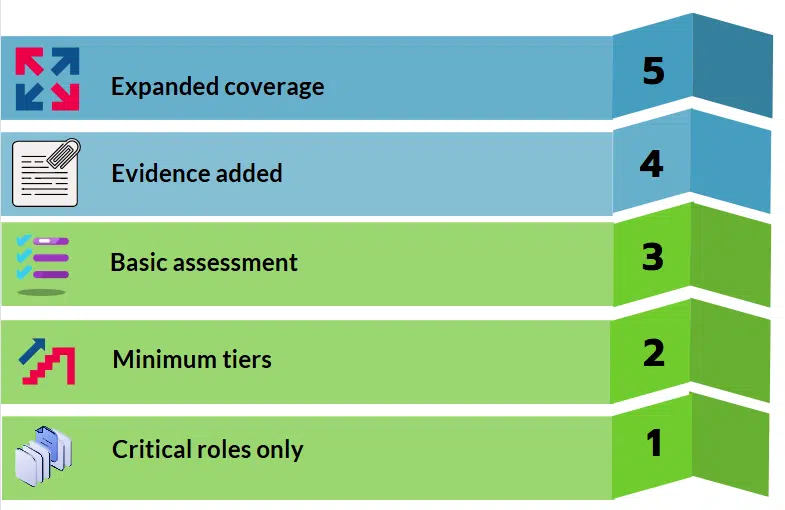
Getting Started with TSAM — Even with Limited Data
Organisations often assume TSAM requires a complete framework to begin. In practice, most start with:
- A small number of critical roles
- 3–4 tiers of progression
- Clearly defined expectations per tier
- One or two assessment methods
- Simple evidence standards
The model can then be expanded iteratively.
FAQ
What does TSAM stand for?
Tiered Skills Acquisition Model.
Is TSAM time-based?
No. Progression is based on demonstrated competence, not time served.
Is TSAM only for nursing?
No. While widely used in nursing, TSAM-style models apply to many workplace-based training contexts.
What’s the difference between TSAM® and TSAM-style models?
TSAM® refers to Mayo Clinic’s trademarked implementation. TSAM-style refers to the broader tiered model described in the literature.
What evidence is required at each tier?
Typically observation, assessor sign-off, and supporting documentation. Requirements vary by role and risk.
Can TSAM work if we don’t have a full competency framework?
Yes. Many organisations start with partial frameworks and expand over time.